
Remember when the biggest threat to your garden was the neighbour’s cat or an army of slugs? Those days feel incredibly quaint now.
Now, we’re swinging violently between summer heatwaves that turn lawns into tinderboxes and sudden floods that completely submerge everything you planted.
And the last few summers have made it clear that waiting for the weather to ‘go back to normal’ is a losing strategy. So, homeowners and landscapers across the country are rethinking how outdoor spaces are designed from the ground up.
Here’s what that looks like in practice.
Smarter Water Management
These days, it’s not unusual for the UK to go from weeks of dry weather to a single afternoon of torrential rain. Unfortunately, most of our gardens simply weren’t built to handle either extreme.
To fix this, you can look at clever features like permeable paving. Permeable surfaces are brilliant because they let water soak right through into the ground beneath instead of letting it pool on top.
If you’re planning a bigger layout change, drainage channels and soakaways are becoming standard practice to direct excess water away from your patio and foundations.
As for those bone-dry months? Installing a rainwater harvesting system will let you build up a reserve for later use. That way, you won’t find yourself standing outside during a summer hosepipe ban feeling guilty just for watering your hydrangeas.
Durable Materials
Your plants aren’t the only things affected by the weather. Cheap decking that warps after one wet winter, paving slabs that crack during a hard frost, and timber edging that starts rotting after a couple of damp seasons can all turn into expensive mistakes.
That’s why more homeowners are investing in materials built to handle our climate.
For example, composite decking, porcelain paving, and sustainably sourced hardwoods are replacing cheaper alternatives. Even gravel is becoming more popular thanks to its excellent drainage and ability to cope with changing weather.
Weather-resistant materials do cost more upfront, but they tend to pay for themselves by lasting longer and needing far less maintenance. So, you won’t find yourself relaying your patio every three years.
If you’re planning any landscaping improvements, choosing durable materials is one of the smartest decisions you can make.
A reputable landscaping service will help you pick options suited to your soil type, drainage conditions, and local climate. This way, you can skip the guesswork at the Wickes checkout.
Hardier Plants
Once your drainage and hard surfaces are sorted, the next question is what to plant.
The old-school habit of filling your borders with whatever catches your eye at the garden centre doesn’t work anymore. The classic plants that thrived two decades ago are struggling, so we need to introduce varieties that are much tougher and more adaptable.
Here are some options most homeowners opt for now:
- Lavender, sedum, and ornamental grasses. They bounce back the second a torrential downpour hits, meaning you don’t have to constantly babysit them once they take root.
- Native UK species. These plants have spent thousands of years adapting to our specific soil and weather. This long history makes them incredibly resilient, plus they support our wildlife in ways that flashy exotic imports simply can’t match.
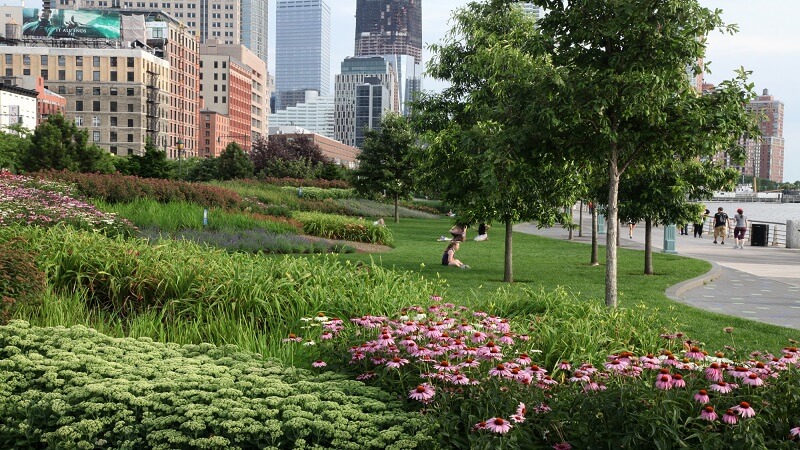
For the best results, try using a mixed planting scheme. When you combine perennials, ornamental grasses, low ground cover, and structured shrubs, you create natural layers that shelter the soil and lock in crucial moisture.
How to Make Your Landscaping More Climate-Resilient
If you don’t want to splurge on a full redesign, you’re in luck. A few well-placed changes can go a long way, and the best part is that most of them work with your existing space instead of requiring you to start over.
Improve Drainage Around Your Property
Standing water after a storm can damage your foundations, kill plants, and turn paths into ice rinks in winter. So, start by checking where water collects in your garden and look at what’s causing it.
Sometimes, the fix is as simple as aerating compacted soil so water can soak in. And if you have solid, non-porous paving in problem areas, swapping it out for a permeable alternative will make a world of difference.
You might also want to install French drains or channel drains along your patio edges or direct your roof’s downpipes straight into a water butt to keep the water moving safely.
Choose Materials That Last
Whenever it’s time to replace a patio or a path, try to prioritise longevity over a cheap price tag.
For example, porcelain paving slabs handle extreme frosts and baking summer heat far better than traditional concrete. Similarly, quality composite decking won’t warp or splinter after a couple of freezing winters.
Spending a bit more on quality materials now often means dealing with fewer repairs later. That’s a trade-off most homeowners are happy to make.
Add Shade and Shelter
Extreme heat and strong winds can take just as much of a toll as flooding. To prevent this, add a well-placed hedge or a simple pergola to create microclimates that protect vulnerable plants and make your outdoor space more usable during summer.
While you’re at it, plant a few deciduous trees. They provide shade when you need it and let light through during the colder months when every bit of sunshine counts.
Plant for Future Conditions
Your plant choices should really reflect the climate your garden will face over the next 10 years, not the weather we used to have back in the 1990s.
So, take note of your soil type and how much direct sunlight different areas get throughout the day, then pick species that can handle dry summers and wet winters.
Remember, a diverse mix of resilient plants will always outperform a bed full of one variety. Throw in some native wildflowers, a few drought-tolerant perennials, and some evergreen ground cover, and you’ll have a garden that looks good year-round.
Conclusion
You don’t have to sacrifice beauty to make your garden weatherproof. In fact, it can be the sort of outdoor space you’d expect to see on Gardeners’ World, just with fewer maintenance headaches.
Start with one or two changes, see how they hold up through a season, and build from there. Give it a year, and you’ll wonder why you ever spent so long fighting the weather instead of designing your garden around it.