
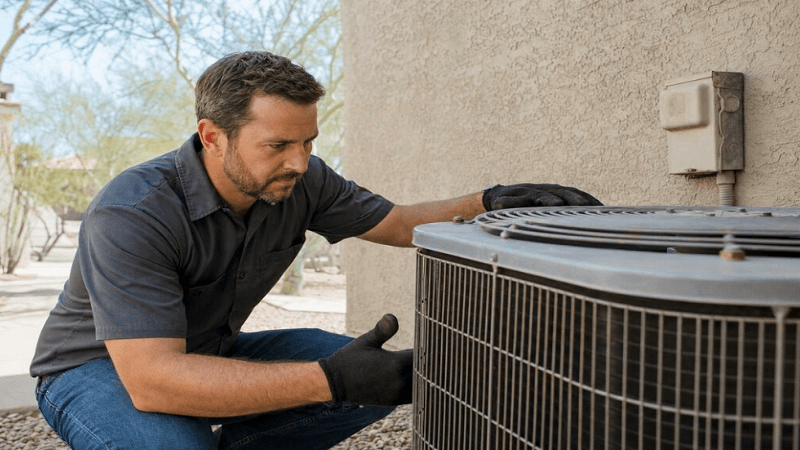
Phoenix summers are no joke. Temperatures regularly climb past 110 degrees, and a failing AC stops being an inconvenience fast. Knowing when to call an HVAC contractor in Phoenix, AZ can protect your home, your family, and your equipment before a small problem turns into a costly breakdown. Penguin Air, Plumbing & Electrical has been serving Phoenix Valley homeowners since 2011, earning a BBB A+ Rating along the way. Homeowners in Ahwatukee, Arcadia, and Laveen run their AC systems nearly 8 to 9 months per year, accelerating wear far beyond the national average. This article covers the clearest signs it’s time to pick up the phone.
Why Phoenix AC Failures Are More Urgent Than Anywhere Else
A broken AC in the Greater Phoenix area during July is a health emergency. Indoor temperatures can climb above 85°F fast once a system fails, putting kids, older adults, and pets at real risk. The Valley logs roughly 4,500 cooling degree days a year, more than three times the national average, and many local systems rack up 3,000 or more runtime hours every season. That near-constant operation accelerates wear on compressors, capacitors, and coils far beyond what manufacturers design for in milder climates. A failing capacitor or low refrigerant charge that costs around $300 to fix today can cascade into full compressor failure, pushing replacement costs past $3,000.
Signs Your AC Needs Immediate Attention
Across Tempe, Mesa, and Scottsdale, systems often run twelve to sixteen hours a day at peak summer, and that continuous load turns a minor fault into a failure within hours.
Your Home Is Not Cooling Down
Your thermostat is set to 78 degrees, but the house climbs to 85 and stays there. On a 110-degree day in Chandler or Gilbert, that is a health risk. Inability to hold your setpoint usually points to a refrigerant leak, a failing compressor, or severely clogged evaporator or condenser coils, all of which desert heat degrades faster than average. If your system runs constantly but never catches up, call for service immediately.
You Hear Strange Noises Coming From the Unit
Banging or clanking from the compressor housing typically means a loose or broken connecting rod, piston pin, or crankshaft. Turn the system off at the thermostat immediately. Running a unit with a broken connecting rod can seize the compressor within hours, turning a repairable fault into a full replacement. Squealing or screeching points to a worn blower belt on older systems or a failing motor bearing on newer ones. Either way, you are hearing the early stages of full motor seizure, and catching it now costs far less than replacing the motor later.
Your Energy Bills Jumped Without Explanation
A 20 to 30 percent spike in your electric bill, with no change in usage, is a real diagnostic signal. Dirty evaporator coils, low refrigerant charge, or a failing run capacitor can all force the compressor to draw excess amperage. Phoenix’s monsoon season, running July through September, packs dust and debris into outdoor condenser fins after every storm, directly causing efficiency loss. If you also notice indoor moisture increasing alongside higher bills, your evaporator coil or drain system may be compromised, a combination that warrants a call to a licensed HVAC contractor sooner rather than later.
Frequently Asked Questions
How Do I Decide Whether to Repair or Replace My AC Unit?
Use the 50% rule. If the repair cost exceeds half the price of a new system and your unit is over 10 years old, replacement usually makes more financial sense. Because Valley systems run two to three times the hours of units in cooler regions, that 10-year threshold arrives faster here.
How Much Does an HVAC Diagnostic or Repair Cost in Phoenix?
Any reputable HVAC contractor in Phoenix, AZ should provide flat-rate pricing before work begins. As a general guide:
- Diagnostic fee: $75 to $150
- Capacitor replacement: $150 to $400
- Refrigerant recharge: $200 to $500
- Compressor replacement: $1,500 to $3,500 and up
How Often Should Phoenix Homeowners Schedule AC Maintenance?
Twice per year. Book the first visit in spring, ideally March or April, before peak cooling demand. Schedule the second in October or November to prep the heating system. If that fall inspection turns up a furnace or heat pump issue, prompt heating repair services from Penguin Air, Plumbing & Electrical will keep you covered once desert nights cool off.
Is It Okay to Run My AC All Night During a Phoenix Summer?
Yes. Modern systems are engineered for continuous operation. Running your AC overnight in Goodyear or Glendale during July is expected, not harmful, as long as the system is properly maintained. If it struggles to keep up overnight, that is the signal worth calling about.
Does Penguin Air, Plumbing & Electrical Offer Emergency HVAC Service?
Penguin Air, Plumbing & Electrical offers 24/7 emergency HVAC service, including weekends and holidays, reachable at (480) 525-5400. Their office is located at 3710 East University Dr Suite 1, Phoenix, AZ 85034, near the I-10 and University Drive corridor, with technicians regularly dispatched to Tempe and Mesa within the same day.
About Penguin Air, Plumbing & Electrical
Founded in 2011, Penguin Air, Plumbing & Electrical is a Phoenix-based HVAC, plumbing, and electrical provider serving homeowners across the Greater Phoenix metro area, including Chandler, Gilbert, Glendale, Goodyear, and Avondale. It holds a BBB A+ Rating and has been BBB Accredited since 2011. The team specializes in air conditioning repair, heating systems, heat pump technology, mini-split systems, indoor air quality, and residential and commercial plumbing. Technicians are licensed, background-checked, and trained on both legacy R-410A systems and newer low-GWP refrigerants, so they can advise honestly on whether repair or replacement is the smarter long-term call for a specific home.