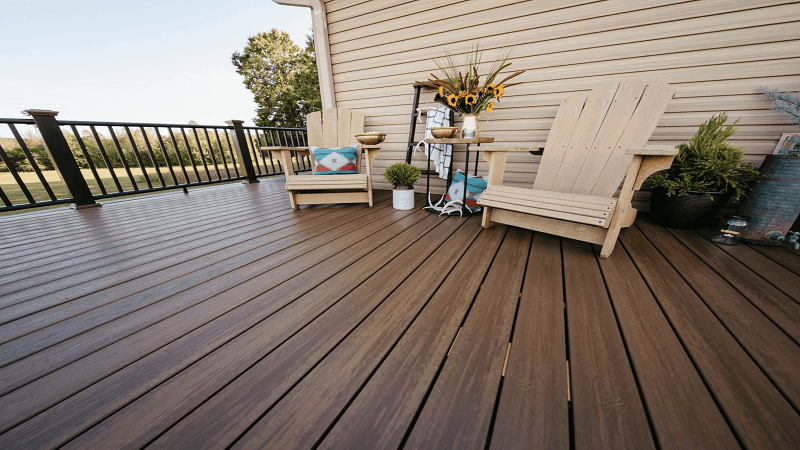
Every garden is different. The deck that looks perfect outside a contemporary glass extension would feel completely out of place wrapped around a Victorian terrace. The board that suits a poolside installation in a south-facing garden is not the same board that belongs on a shaded north-facing balcony in a city centre flat.
This is the part of the buying process that most guides skip over. They tell you what composite decking is, why it beats timber, and what a warranty should cover. What they rarely do is help you understand that the range you choose matters just as much as the material itself. Getting the specification right is one half of the decision. Finding the range that fits your specific space, your aesthetic, and the way your garden actually gets used is the other half.
When you are browsing composite decking options, the sheer breadth of what is available can feel overwhelming. This guide exists to cut through that. By the end, you will know exactly what each type of range is designed for, which characteristics to prioritise for your situation, and how to make a final decision you will be satisfied with every time you walk outside.
Why Composite Decking Ranges Exist in the First Place
Different Spaces Have Different Demands
A deck around a swimming pool faces constant water exposure, intense UV light, and bare feet on hot days. A roof terrace in a city faces wind loading, temperature extremes, and the need for boards light enough to keep structural weight manageable. A family garden deck faces heavy furniture, children, spilled food and drink, and the full cycle of British seasons.
No single board profile, colour palette, or surface texture is the optimal choice for all of these environments. Ranges exist because manufacturers have engineered specific products to perform best in specific conditions, with particular aesthetics, at particular price points.
Understanding Range Architecture
Most quality composite decking suppliers structure their offering across a small number of ranges, each defined by a combination of board profile, surface finish, colour palette, warranty level, and intended application. Understanding how those ranges are structured helps you move quickly to the right product rather than spending hours comparing boards that are not actually suited to what you need.
The decision tree is simpler than it appears once you know what questions to ask.
The Main Range Types and What Each One Is Built For
Entry-Level Ranges
Entry-level composite decking ranges are designed to deliver the core benefits of composite, no maintenance, weather resistance, and a natural appearance, at the most accessible price point. These boards typically feature a grooved profile, a focused colour palette of the most popular tones, and structural warranties that cover the basics.
They are the right choice for homeowners who want a reliable, attractive deck without paying for features their project does not require. A straightforward garden deck in a sheltered location, away from water and with moderate foot traffic, is exactly the application an entry-level range is built for.
What to watch: confirm full capping on all four sides even in entry-level ranges, and check that fade and stain coverage is included in the warranty rather than structural coverage only.
Mid-Range Collections
Mid-range composite decking is where the majority of residential projects find their ideal balance. These ranges typically offer a broader colour palette, more convincing surface textures that replicate specific timber species, and warranty coverage that extends meaningfully across fade, stain, mould, and structural integrity.
Board profiles in mid-range collections often include both grooved and solid options, giving you flexibility depending on your installation method and the specific demands of your space. Surface embossing at this level is noticeably more detailed than entry-level products, with grain patterns that have genuine depth rather than a flat printed appearance.
For most family gardens, first-floor terraces, and outdoor dining spaces, a well-specified mid-range board delivers everything the project needs without the premium associated with the top of the range.
Premium and Signature Ranges
Premium ranges represent the highest specification available in composite decking. These boards are typically distinguished by their surface realism, with grain patterns, colour variation across the board length, and tactile texture that makes convincing timber imitation genuinely difficult to distinguish from the real thing at a normal viewing distance.
Colour palettes at this level tend to include more unusual and distinctive tones alongside the core range, giving designers and homeowners with specific aesthetic requirements greater flexibility. Warranty coverage is comprehensive and clearly documented. Board profiles are often available in wider widths and longer lengths, which reduces the number of joints in a finished deck and creates a cleaner overall appearance.
Premium ranges are the natural choice for significant architectural projects, high-value properties where the garden is an extension of the interior aesthetic, and any installation where the visual result needs to impress rather than simply satisfy.
Choosing a Range Based on Your Space
Gardens and Outdoor Living Areas
The standard residential garden deck is the most common application and the one for which the widest range of options is available. The key decisions here are colour and profile.
Colour should be assessed in your actual garden conditions, not on a screen. Order samples and live with them outside for at least a week before making a final choice. The relationship between your decking colour and your house exterior, your fencing, and your planting is what determines whether the finished result feels considered or accidental.
Profile choice between grooved and solid boards typically comes down to installation method. Grooved boards with hidden clip fixings create a seamless surface without visible fasteners. Solid boards are denser and better suited to high-traffic areas, steps, and fascia applications.
Poolside and Water-Adjacent Installations
Any deck adjacent to a swimming pool, hot tub, or water feature requires specific attention to slip resistance and heat absorption. The range you choose for this application needs to meet a minimum R12 slip resistance rating, and ideally higher for areas where wet feet are constant.
Colour choice matters practically as well as aesthetically. Darker boards absorb more solar heat, which becomes uncomfortable underfoot in direct sun during summer months. Lighter shades reflect heat more effectively and are generally more comfortable barefoot, though they require more attention to keep clean in areas with high water and chemical exposure.
Look for ranges with specific poolside or water-adjacent credentials from the manufacturer rather than assuming a standard residential board will perform adequately in this environment.
Balconies and Roof Terraces
Weight is a genuine structural consideration for elevated installations. Composite boards are heavier than some alternatives, and the cumulative weight of a large balcony deck needs to be within the load capacity of the structure below. Confirm this with a structural engineer if there is any uncertainty.
Drainage is the other critical factor on elevated surfaces. Boards with effective grooved profiles that channel water away prevent the pooling that increases slip risk and can cause long-term surface issues. The subframe design on a balcony also needs to account for drainage without compromising the structural integrity of the surface.
Ranges specifically positioned for balcony and terrace use will address these requirements in their technical documentation. Use those specs rather than adapting a ground-level residential range and hoping for the best.
Commercial and High-Traffic Applications
Hospitality venues, public spaces, retail environments, and any installation that sees footfall significantly above residential levels require boards from ranges specifically rated for commercial use. These boards typically feature enhanced structural specification, higher slip resistance ratings, and commercial warranty terms that reflect the more demanding conditions.
Colour and aesthetic choices still matter in commercial applications, arguably more so given the impression a well-designed outdoor space creates for a business. The best commercial ranges do not sacrifice appearance for function. They deliver both, because the businesses installing them need both.
The Colour Decision Across Ranges
How Ranges Define Their Palette
Each composite decking range is built around a curated colour palette designed to work together and suit specific aesthetic contexts. Understanding what a range’s palette is optimised for helps you identify quickly whether it suits your project.
Warm, timber-toned palettes anchor a range in natural, organic aesthetics. They suit traditional homes, cottage gardens, and outdoor spaces with established planting where a synthetic-looking material would feel out of place. These ranges work hard to replicate the visual warmth of real hardwood.
Cool and contemporary palettes built around greys, slate tones, and charcoal shades align with modern architecture, clean-line landscaping, and outdoor spaces that function as architectural extensions of contemporary interiors. These ranges prioritise visual clarity and understatement over naturalistic warmth.
Broader palettes that include both warm and cool tones give you maximum flexibility, particularly useful for mixed developments, rental properties, or projects where the end user’s preference is not yet defined.
Why Samples Are Non-Negotiable
No range description, product photograph, or showroom display replicates the experience of seeing a board in your specific garden, against your specific walls and fencing, in your specific light conditions across a full day.
Order samples from any range you are seriously considering. Place them outside. Check them in morning light, overcast midday conditions, late afternoon sun, and after rain when colours deepen. The board that looks right in all of those conditions is the right board. The board that only works in ideal conditions will disappoint you on the days your garden is not at its best.
Making the Final Decision
Start With the Application
Before you look at a single board, be clear about what you are building, where it sits, what conditions it will face, and what use it will see. A poolside terrace, a shaded balcony, a family garden deck, and a restaurant outdoor dining area each point toward a different range before any aesthetic preference is considered.
Match the Range to the Requirement
Use the range documentation to confirm the board meets the technical requirements of your application. Slip resistance rating, warranty scope, board profile, and installation specification all need to be confirmed against your project needs before colour becomes the focus.
Then Make It Yours
Once the technical shortlist is established, the remaining decision is the one that actually makes the finished deck feel right. Colour, texture, board width, and the overall aesthetic of the finished surface are where personal preference takes over from specification. This is the enjoyable part of the process, and it deserves the time to get it right.
Order samples. Live with them. Trust your eyes in context rather than on a screen.
Browse the full range of composite decking collections and find the one built for your space at Assured Composite.