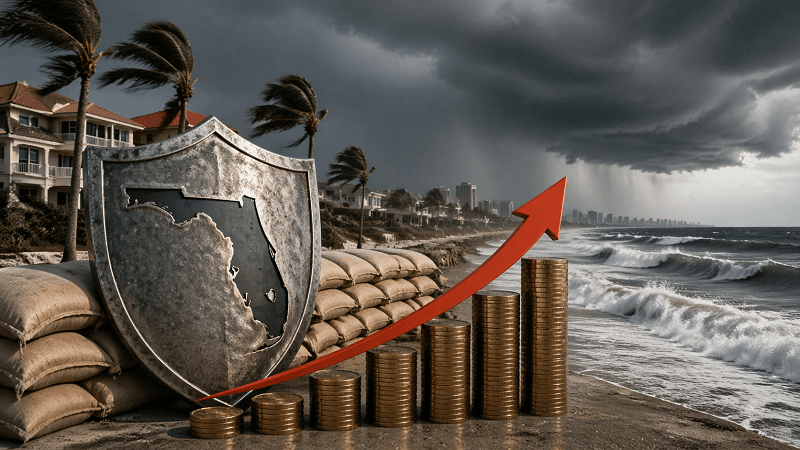
Florida homeowners are facing a historic insurance crisis. If you live in a coastal or high-wind risk area, you already know the frustration of opening your annual renewal letter only to find your premiums have skyrocketed yet again. Many residents feel completely powerless against these rising costs.
But you don’t have to just accept higher bills. Upgrading your home’s physical defenses directly translates to major financial savings. Insurance companies assess risk, and when you prove your home can survive a major hurricane, they are legally required to lower your rates. The most impactful changes you can make involve protecting your home’s entryways.
“Securing your roof so it doesn’t blow off and protecting your windows from flying debris are the two most cost-effective measures you can take to safeguard your home and reduce your hurricane-wind premium.”
Investing in Florida Building Code-approved hurricane screens does more than just protect your property from catastrophic storm damage. It provides access to mandatory insurance discounts and lucrative state grant opportunities that help the upgrade pay for itself.
Wind Lift and Your Building Envelope
To understand why insurance companies care so much about your windows, you need to understand the concept of the “building envelope.” Think of your home’s outer shell—the roof, walls, doors, and windows—as a single, unified barrier against the weather. As long as this envelope remains sealed, your home can withstand incredible external wind pressure.
The real danger starts when a window or door shatters. This creates a massive breach in the envelope. When hurricane-force winds violently enter your living room, the sudden rush of air creates immense internal pressure.
This internal pressure combines with the aggressive suction of the external winds flowing over your house, creating a destructive force known as “wind lift.” The pressure literally pushes your walls outward while simultaneously pushing your roof upward. In severe cases, wind lift easily rips the roof completely off the structure, leading to total catastrophic failure.
How Hurricane Screens Slash Your Insurance Costs
You know that adding hurricane screens protects your home, but how exactly does that lower your monthly bills? The answer lies in a standard assessment called a wind mitigation inspection.
During this inspection, a licensed professional examines your property to document its defensive features. They look closely at your roof connections, water barriers, and most importantly, your window and door protection. To get the maximum discount on your premium, the inspector must verify “full opening protection.”
This means every single opening—including windows, doors, skylights, and lanais—must be covered by Florida Building Code (FBC) or Miami-Dade approved products. If even a tiny bathroom window lacks approved protection, you lose the massive discount.
The financial payoff for meeting these strict standards is huge. Homes built or updated to comply with the 2001 Florida Building Code or later are eligible for a minimum 68% discount on the windstorm portion of their premium.
Because the windstorm portion makes up the vast majority of a Florida insurance policy, these savings add up quickly. In fact, participating homeowners who upgraded their defenses saved an average of over $1,000 per year on insurance premiums as of recent 2025 data. Those savings continue year after year, meaning your storm protection eventually pays for itself entirely.
Why Lighter is Better
For decades, protecting a Florida home meant wrestling with corrugated aluminum panels or heavy steel shutters. While these old-school methods satisfy building codes, they create a miserable experience for the homeowner. Modern technology has introduced a much better option: lightweight fabric hurricane screens.
Here is a quick look at how modern fabric screens compare to outdated metal shutters.
| Feature | Fabric Hurricane Screens | Traditional Metal Shutters |
|---|---|---|
| Deployment Time | Fast (Slides easily into tracks) | Slow (Requires heavy lifting and bolting) |
| Visibility/Light | Excellent (See-through, allows natural light) | Poor (Creates a dark, hot “cave effect”) |
| Weight | Very lightweight (Manageable for anyone) | Extremely heavy (Requires significant strength) |
| Storage Space | Minimal (Rolls up or folds compactly) | High (Requires a large garage space or shed) |
One of the biggest pain points of traditional shutters is the “cave effect.” When a storm knocks out the power and you have metal bolted over every window, your home instantly becomes a dark, sweltering box. You can’t see outside to check on flood waters, assess damage, or watch for emergency responders.
Fabric protection completely eliminates this problem. The see-through woven material allows natural light into your home and lets you look outside safely during the height of the storm. It drastically reduces the psychological stress of riding out a hurricane.
Don’t let the word “fabric” fool you into thinking these screens are weak. This specialized material is three times more durable than many competing options. It is explicitly engineered to withstand the brutal force of Category 5 hurricanes and sustained winds of up to 188 mph.
The Advantage of Rapid Deployment
Hurricanes are unpredictable. Sometimes a storm shifts at the last minute, leaving you with very little time to prepare your home.
Innovative fabric screens solve the physical burden of last-minute storm preparation. The system uses lightweight fabric and strong support bars that can seamlessly span wide openings up to 15 feet. You completely avoid the frantic rush to the hardware store for heavy plywood or the back-breaking labor of pulling metal panels out of the garage.
Because the materials are so light, almost anyone can deploy them. The system requires very little installation time and physical strength. You simply guide the screen into place and secure it, moving quickly from window to window before the first rain bands arrive.
Conclusion
Upgrading to code-approved hurricane screens is not just an expense—it is a smart investment that actively pays for itself. By taking advantage of mandatory insurance discounts and state grant programs like “My Safe FL Home,” you can drastically reduce the long-term cost of living in Florida.
These modern screens offer incredible dual benefits. You successfully protect your home’s structural envelope from catastrophic wind lift, ensuring your family stays safe. At the same time, you completely eliminate the physical pain, heavy lifting, and depressing darkness associated with old-fashioned metal shutters.