
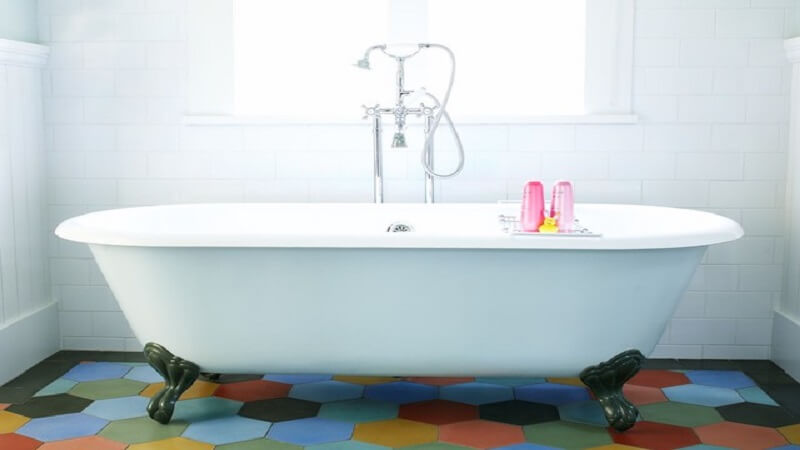
A clawfoot tub commands a bathroom in a way that no other fixture does. It sits freestanding, occupying space with a presence that is simultaneously functional and sculptural. In an era of modular bathroom components and prefabricated shower surrounds, a clawfoot tub is an anomaly — a piece of furniture as much as a fixture, with a history and a character that modern alternatives simply cannot replicate.
For homeowners who have one, the challenge is rarely about wanting to get rid of it. It’s about what to do when the surface no longer matches the tub’s intrinsic quality. A clawfoot with yellowed, chipped, or dull enamel can look neglected in a way that obscures what it actually is: a beautifully made object that was built to last well beyond the current century.
Professional clawfoot tub refinishing is what bridges that gap. It restores the surface to a condition that reflects the quality of what’s underneath — and it does so in a way that preserves everything that makes a clawfoot worth having in the first place.
What Makes a Clawfoot Tub Worth Preserving
Clawfoot tubs were the standard of quality residential bathroom design from the late 19th century through the early decades of the 20th. They were manufactured primarily from cast iron — heavy, dimensionally stable, and capable of retaining heat in a way that lighter materials never have matched. The interior was coated with multiple layers of porcelain enamel fired at high temperature, producing a surface that bonded chemically to the iron and was genuinely hard and resistant to the scratches and abrasion that affect acrylic and fiberglass.
The feet — typically cast iron as well, in ball-and-claw or more ornate period designs — are structural and aesthetic in equal measure. They lift the tub off the floor, creating the visual lightness that defines the form, and they distribute the considerable weight of the tub and its water load across four stable points. They were designed to be seen, to be admired, and to last.
Contemporary clawfoot-style tubs are available, but they represent a different category of object. Many are acrylic or thin-gauge steel with cast iron or resin feet added for appearance. They look similar from across the room. They don’t feel or perform the same way. An original cast iron clawfoot with refinished enamel is in a different league — and any homeowner who has owned both knows it immediately.
This is why refinishing rather than replacing is almost always the right decision for an original clawfoot. There is no direct replacement at a comparable price point. What you have is worth restoring.
Common Surface Conditions in Older Clawfoot Tubs
Most clawfoot tubs that come to a refinishing contractor share a recognizable set of surface conditions. Understanding them helps homeowners assess what they’re working with and set realistic expectations for the refinishing result.
Yellowing and patina. Original white or off-white porcelain enamel shifts in color over decades. Exposure to hard water minerals, cleaning products, and simple oxidation produces a yellowing that ranges from subtle warmth to pronounced amber discoloration. Some homeowners appreciate this patina; others find it makes the tub look dirty regardless of how clean it is. Refinishing returns the surface to a consistent, bright white or the color of the homeowner’s choosing.
Chips and exposed iron. Impact damage — from dropped items, plumbing work, or moves between homes — chips the enamel and exposes the bare iron beneath. Exposed iron begins to rust almost immediately in a wet environment, and rust can spread laterally beneath the enamel surface if not treated. Chips that are addressed promptly are straightforward repair candidates; chips that have been left to rust for years require more involved treatment.
Crazing and surface cracking. Fine networks of surface cracks can develop in old porcelain enamel from thermal stress accumulated over many decades. Unlike the crazing in fiberglass or acrylic, enamel crazing is typically shallow and doesn’t indicate structural compromise — but it traps dirt, looks aged, and is addressed effectively by refinishing.
Dullness and loss of gloss. Repeated cleaning with abrasive products — which were standard household cleaning advice for generations — gradually abrades the enamel surface and reduces its gloss. A tub that was once mirror-bright becomes flat and matte over time. Refinishing restores that gloss comprehensively.
Staining. Iron staining from rust spots, blue-green staining from copper pipes, and hard water scale deposits all discolor enamel surfaces in ways that cleaning alone cannot reverse once they’ve set. These stains are eliminated as part of the refinishing process.
The Refinishing Process for Clawfoot Tubs
Professional clawfoot tub refinishing follows the same fundamental sequence as other cast iron refinishing work, with additional considerations specific to the freestanding form and the decorative exterior that defines the clawfoot aesthetic.
The interior refinishing process:
Chemical cleaning and stripping. All surface contamination, mineral deposits, soap residue, and any previous refinishing coatings are removed. The enamel surface must be chemically clean for subsequent preparation to work correctly.
Rust treatment. Any areas of exposed iron are treated with rust-neutralizing compounds that chemically convert and stabilize the oxidation before it is sealed under the new coating. Skipping this step allows rust to continue developing beneath the finish, causing it to lift and fail prematurely.
Chip and enamel repair. Chips, cracks, and areas of missing enamel are filled, shaped, and smoothed with compatible materials. The goal is a surface profile that is uniform and seamless before any coating is applied.
Surface abrasion. The enamel is carefully abraded to create a mechanical bond for the new coating. Porcelain enamel is among the hardest substrates a refinishing technician works on, and proper abrasion requires experience with the material.
Bonding primer. A primer formulated specifically for vitreous enamel substrates is applied. Adhesion to fired porcelain is demanding — the right primer chemistry is what makes the difference between a finish that holds for a decade and one that begins peeling within months.
Topcoat application. A professional two-part urethane topcoat is sprayed in controlled, even layers. The interior of a clawfoot tub requires particular attention to the curved surfaces and the transition at the rim, where finish consistency is most visible.
Exterior and feet. Many clawfoot tub refinishing projects also address the exterior of the tub and the feet. The exterior is visible from all sides, unlike a built-in tub, and its condition contributes significantly to the overall impression. Feet can be repainted or powder-coated as part of a comprehensive restoration.
The finished tub looks genuinely restored. The interior is bright, smooth, and uniformly glossy. The exterior, if addressed, is clean and consistent. The feet, refinished or repainted, complement the overall look. The result is a tub that could have been installed last week — and will perform as well as it did when it was new.
Interior vs. Exterior: Understanding the Full Scope
One aspect of clawfoot tub refinishing that distinguishes it from built-in tub work is the visibility of the exterior. A standard built-in tub sits against walls with only the interior surface visible. A clawfoot tub is freestanding, often positioned as a focal point, and its exterior is fully on display from every angle.
This means that a clawfoot refinishing project has a broader potential scope than other tub work. The interior is the functional priority — it must be smooth, durable, and impervious to water and cleaning products. But the exterior condition contributes equally to the aesthetic result, and a beautifully refinished interior on a visibly worn exterior produces a tub that looks half-finished.
Discuss the exterior with your contractor before the project begins. Options typically include refinishing the exterior in a complementary or contrasting color — a white interior with a matte black, navy, or period-appropriate color on the outside has become a popular choice in contemporary bathroom design. The feet can be repainted, powder-coated in a matching or contrasting finish, or left in their existing condition if it’s acceptable.
The most coherent results come from treating the clawfoot as the design object it is and making deliberate choices about every visible surface, rather than addressing only the interior and leaving the rest to chance.
Clawfoot Tubs and Bathroom Design
A clawfoot tub sets the design direction for a bathroom in a way that few fixtures do. Its freestanding form, period proportions, and inherent presence make it the visual anchor of the room — and every other decision in the space responds to it.
For homeowners renovating a bathroom around an existing clawfoot, refinishing the tub first — or at minimum deciding on its final color and finish before making other choices — is a logical starting point. The tub’s color influences tile selection, hardware finish, wall color, and lighting decisions in ways that are easier to navigate when that anchor point is established.
A traditionally finished clawfoot in bright white with nickel or chrome hardware calls for one set of design responses. A clawfoot with a dark exterior finish and brushed brass feet calls for something quite different. Refinishing gives the homeowner control over that anchor point in a way that simply keeping the existing finish does not.
The floor-mounted faucet and hand shower that typically accompanies a clawfoot tub is another design element worth coordinating. Faucet finish, handle style, and the height and configuration of the floor-mount all interact with the tub’s proportions and finish color. Treating the entire composition — tub, hardware, floor, wall — as an integrated design decision produces far more satisfying results than making each choice in isolation.
Finding a Contractor Qualified for Clawfoot Work
Clawfoot tub refinishing is more demanding than standard built-in tub work for several reasons. The freestanding form requires the technician to work around the entire tub, not just the interior. The cast iron substrate and porcelain enamel surface require specific preparation and bonding approaches. And the decorative exterior — if it’s being addressed — requires a level of surface preparation and finishing care that goes beyond functional interior work.
When evaluating contractors, ask specifically about their experience with clawfoot tubs. Ask how they handle rust at chip sites on the interior. Ask what they recommend for the exterior finish and what options they can execute. Ask to see before-and-after photos from actual clawfoot projects — both interior and exterior if applicable.
The warranty conversation is also important. A contractor who backs clawfoot work with a meaningful multi-year warranty on the interior finish is telling you something about their confidence in their process and materials. A vague or very short warranty warrants follow-up questions.
Clawfoot tub refinishing is a specialty within a specialty. The contractors who do it well tend to be proud of their work and willing to show it. That enthusiasm, combined with clear and specific answers to your questions about process and materials, is a good indicator that you’ve found the right person for the job.
A Fixture Worth the Attention It Deserves
A clawfoot bathtub is one of the most distinctive features a bathroom can offer. It carries history, craftsmanship, and a physical presence that contemporary fixtures rarely achieve. A worn surface is not a reason to abandon it — it’s a reason to restore it.
Professional refinishing returns a clawfoot tub to the condition its construction warrants. The enamel is bright and smooth. The iron underneath is protected and stable. The feet are finished to complement the whole. And the bathroom has, at its center, a fixture that looks as good as it performs — one that will continue to define the space for years to come.
If your clawfoot has been waiting for the attention it deserves, the path forward is clearer than you might think. A qualified refinishing contractor, the right preparation, and the right materials are all it takes to give an exceptional fixture the surface it was always meant to have.