
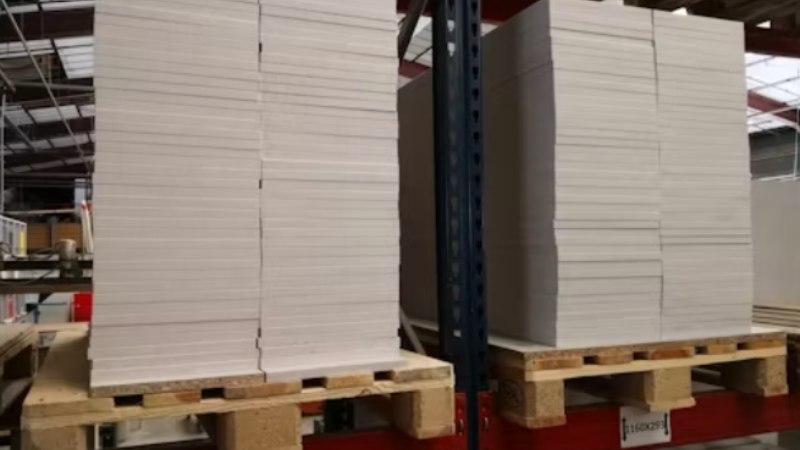
The manufacturing landscape is undergoing a systemic transformation driven by shifting consumer sentiment and aggressive international legislation. As single-use plastics face sweeping bans globally, the demand for sustainable paper packaging has surged to unprecedented levels. For production directors and facility managers, this transition presents a complex dual challenge: phasing out legacy materials while drastically scaling up eco-friendly output to meet modern supply chain quotas.
The Global Mandate for Sustainable Packaging Alternatives
Across major global markets, new legislative frameworks are aggressively taxing or outright banning petroleum-based packaging. This regulatory environment is forcing fast-moving consumer goods (FMCG) brands and logistics networks to secure massive volumes of robust, recyclable paper alternatives. Consequently, packaging manufacturers are under intense pressure to expand their production capabilities quickly and efficiently.
Scaling operations to meet this sustainable packaging mandate requires more than just changing raw materials; it demands a fundamental upgrade in machinery infrastructure. Facilities must ensure that their capital investments in new equipment can handle the relentless pace of modern fulfillment cycles. The objective is to achieve maximum throughput while maintaining the structural integrity required for heavy-duty retail and industrial use.
As regulatory pressures mount, manufacturing facilities must transition rapidly without disrupting their output volume. To achieve this scale, facilities are increasingly relying on advanced automation from established machinery builders like KETE Group, which engineer paper bag making systems capable of maintaining high-speed production while adhering to strict eco-friendly tolerances.
Automating the Production Line for High-Volume Output
Historically, paper bag manufacturing relied heavily on semi-automated systems that required constant manual intervention and operator oversight. These legacy setups inevitably create workflow bottlenecks, particularly when dealing with the high-tensile kraft paper required for durable, modern packaging. Modernizing the production floor with fully automated workflows eliminates these friction points and dramatically increases hourly yield.
Transitioning to fully automated machinery standardizes the production cycle, drastically reducing the labor costs associated with manual web threading and roll changes. With continuous feed systems and automated tension controllers, facilities can achieve uninterrupted operations. This shift ensures consistent product quality and predictable delivery timelines for large-scale B2B clients.
Precision Engineering in Modern Paper Bag Machinery
The core of modern high-volume output lies in the precise, synchronized mechanical movements of advanced paper bag making machines. To consistently produce millions of flawless units, next-generation equipment integrates highly specialized components:
- Servo-Driven Folding Systems: These ensure micro-millimeter accuracy during the complex folding phases, preventing structural weaknesses in the final product.
- High-Speed Bottom Gluing: Advanced extrusion valves apply precise micro-dots of water-based adhesives, preventing excess glue seepage and ensuring rapid curing times.
- Automated Web Guiding: Real-time optical sensors constantly monitor and adjust the paper alignment, eliminating the risk of skewed cuts and misaligned seams.
Minimizing Material Waste and Maximizing Energy Efficiency
For production managers calculating the return on investment (ROI) of new equipment, raw material yield and operational overhead are the primary metrics. Upgrading to state-of-the-art machinery significantly reduces substrate waste caused by poor registration, adhesive overflow, or mechanical jamming. By optimizing the material-to-yield ratio, manufacturers can immediately improve their gross profit margins on large-scale runs.
Furthermore, next-generation automation incorporates advanced power management systems designed to lower the carbon footprint of the facility itself. From optimized heat-sealing modules to regenerative braking in servo motors, these machines draw significantly less current per operational hour.
| Metric / Equipment Type | Traditional Semi-Automated Machinery | Modern Automated Paper Bag Systems |
| Average Wastage Rate | 3.5% – 5.0% | < 0.5% |
| Energy Consumption (per 10k units) | High (Constant mechanical draw) | Low (Smart power management) |
| Adhesive Usage Efficiency | Manual / Inconsistent | High (Precision micro-dosing) |
| Changeover Downtime | 45 – 60 minutes | < 15 minutes |
Adapting to Stringent International Environmental Standards
Operating a profitable packaging facility in 2026 requires strict adherence to international environmental compliance metrics. Brands are actively auditing their packaging suppliers to ensure that the entire manufacturing process—from energy consumption to adhesive toxicity—meets global sustainability benchmarks. Upgrading production machinery ensures that your facility passes these stringent audits effortlessly.
The transition towards automated paper packaging is no longer optional but a regulatory necessity. According to comprehensive reports by the UN Environment Programme on plastic pollution, shifting to sustainable materials is critical for global supply chains seeking to remain compliant with upcoming international trade mandates.
By proactively aligning factory capabilities with these macro-environmental trends, manufacturers position themselves as reliable partners for top-tier global brands. Equipment that supports solvent-free operations, utilizes sustainable water-based adhesives, and minimizes energy consumption is fundamental to maintaining this competitive edge.
Key Takeaways
| Area | Key Takeaway | Impact/Data |
| Waste | Upgrade to precision servo-driven lines | Slashes material waste to < 0.5% (vs 5%) |
| Downtime | Deploy automated web-guiding feed systems | Cuts job changeovers to < 15 mins (vs 60 mins) |
| Efficiency | Implement micro-dosing extrusion valves | Prevents glue overflow and speeds up curing |
| Energy | Utilize smart power management modules | Significantly reduces kWh draw per 10k units |
| Compliance | Transition to water-based, solvent-free processes | Passes UNEP audits and avoids trade penalties |
Conclusion: Investing in Future-Ready Equipment
The shift towards eco-friendly packaging is a permanent evolution of the global supply chain, driven by both consumer demand and legislative action. For packaging manufacturers, scaling up paper production is an immediate operational imperative that requires robust, precision-engineered hardware. By investing in highly automated, energy-efficient machinery, facilities can eliminate traditional bottlenecks and drastically reduce costly material waste. Ultimately, upgrading manufacturing infrastructure is a strategic necessity to ensure long-term profitability and strict compliance in a sustainability-focused market.