
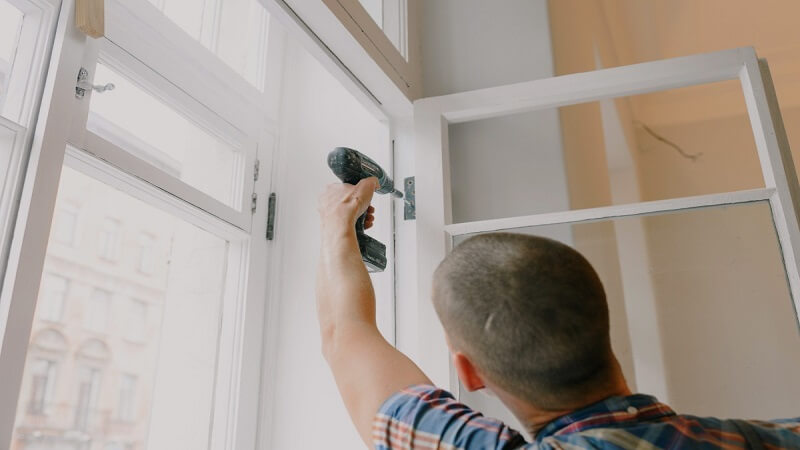
If you own a Victorian or Edwardian property in Exeter, sash windows probably came with the house. So did the draughts. So did the rattling on windy nights and the nagging suspicion that half your heating is escaping through the frames. The instinct is to replace them – but in Exeter, that instinct is worth slowing down on. The city’s planning rules, the quality of original Victorian timber, and the real cost of different options all point toward a more considered approach than ripping out the old and putting in the new.
How Sash Windows Actually Work
Before deciding what to do with them, it helps to understand what you’re dealing with. A sash window is mechanically quite different from the casement windows found in most houses built after the Second World War. Rather than swinging on hinges, a sash slides vertically within a box frame, counterbalanced by cast iron weights connected via cords running over pulleys inside the frame. That’s what makes sash windows so repairable – most of the problems that develop in them (stiff sashes, broken cords, rattling glass, cold draughts, failed putty) are not problems with the frame itself, but with the hardware and seals within it.
The timber box frame is usually far more durable than people assume. Victorian sash windows were typically made from slow-grown Baltic pine, denser and more rot-resistant than most of the softwood used in modern joinery. Many original frames in Exeter’s St Leonard’s, Heavitree, and Topsham terraces are still performing on their first timber, 130-plus years on. A frame that’s noisy, draughty, or stiff may need cord replacement, draught sealing, and easing. Not a skip and a new window.
The Repair Case Is Stronger Than It Looks
The main argument for replacing rather than repairing is thermal performance, and it’s fair on the face of it. A single-glazed sash window has a U-value of around 5.0 W/m²K. A modern A-rated double-glazed unit typically achieves 1.2-1.4 W/m²K. That gap is real.
What’s less often said is that a significant portion of it comes from draughts rather than the glass itself. Air infiltration through an unsealed sash – around the meeting rail, between the sash and the frame, through failed putty – contributes substantially to heat loss, and it’s fixable without touching the glazing. A properly overhauled sash window with draught pile fitted to the sashes and a brush seal at the meeting rail loses far less heat than an untreated original. Add secondary glazing behind the original frame and the effective U-value drops to around 1.8-2.0 W/m²K – meaningfully improved and within reasonable reach of a full replacement unit.
The cost comparison is worth spelling out. A timber replacement sash window, made to match the original profile, typically costs £900-£1,500 per window supplied and fitted. A full overhaul of an existing frame – new cords, draught sealing, re-setting of the sashes, repointing putty – usually runs £300-£600 per window. Add secondary glazing and you’re at £600-£1,000. On a Victorian terrace with ten or twelve windows, that saving is considerable, and the original frames stay in place – which matters a lot when planning restrictions apply.
When You Should Replace
Severe rot is the most common case. If water has worked into the lower rail of the sash or the base of the box frame and the timber has softened significantly, repair is possible but expensive. A small wet rot pocket caught early can be cut out and filled with epoxy resin for a fraction of the cost of replacement. A lower rail that’s rotted through most of its length needs cutting out entirely and new timber spliced in, at which point the cost starts to compete with a new frame. Get the frame properly inspected – not just looked at – before committing either way.
Structural racking is less common but worth knowing about. Exeter has variable ground conditions, particularly on the hillside streets around Pennsylvania Road and the slopes above St Thomas, and some properties in these areas have seen enough ground movement over 150 years to pull a sash box frame out of square. A racked frame can sometimes be eased, but significant distortion makes the sashes hard to run cleanly and draught sealing becomes very difficult.
If thermal performance is the priority and the property has no planning constraints, a modern double-glazed unit – in a well-profiled uPVC sliding sash or a timber equivalent – will outperform even a well-restored original. Worth knowing that going in.
Exeter’s Conservation Areas Change The Calculation
This is where Exeter diverges sharply from most of England. The city has a higher proportion of conservation area and listed building properties than average, concentrated in exactly the areas where original sash windows are most common.
Cathedral Close, Topsham’s historic core, much of St Leonard’s, the Heavitree Road corridor, and large parts of Pennsylvania are either conservation areas or contain listed buildings. In a standard conservation area, replacing windows might still fall under permitted development. But Exeter City Council has applied Article 4 Directions across most of its designated areas – these remove permitted development rights, meaning window replacement in those streets requires a planning application even for straightforward like-for-like work.
Conservation area policy in Exeter generally requires replacements to match the original materials and profile. For a Victorian terrace with original timber sashes, that means timber replacements, not uPVC. The Planning Portal’s guidance on doors and windows sets out the framework, and Exeter City Council’s conservation team can confirm what applies to a specific street.
For listed buildings the bar is higher still. Listed building consent is required for any external alteration, and Historic England’s guidance on glazing in historic buildings consistently opposes removing original windows where repair is viable. The standard approved route is secondary glazing – fitted internally, leaving the original window untouched, and generally not requiring consent because it makes no change to the outside appearance.
What A Proper Survey Should Cover
Any installer assessing sash windows should be doing more than checking whether the glass is whole. The structural inspection matters: the condition of the box frame at the base (where water pools and rot starts), the state of the lower rail on each sash, whether the original cord weights are present and the right weight for the sash, how much movement there is with the sash closed, whether the frame is plumb and square.
The output of a decent survey is a recommendation per window, not a blanket quote to replace everything. Some windows on a property will be in better condition than others. Some may need only cords and seals while others have rot that needs dealing with. Any installer who recommends wholesale replacement without inspecting each window individually is worth questioning. So is any quote that arrives before the surveyor has established what planning implications apply.
Choosing The Right Window Installer
Choosing the right window installer can be challenging for you. Experience with sash windows varies considerably, and the gap is wider than most homeowners expect. An installer who spends most of their time fitting uPVC casements is operating in a completely different world from a joiner who regularly works on period timber sashes. The material knowledge is different, the diagnostic approach is different, and so is familiarity with the planning rules that apply in Exeter’s designated areas.
For replacement work, FENSA registration is the minimum standard – it covers the installation of replacement windows and issues the certificate your solicitor will ask for when you sell. For repair work, FENSA isn’t the relevant credential. What you’re looking for instead is verifiable experience on period properties and references from conservation area or listed building jobs in Exeter specifically. Ask an installer what they’d do with a sash that has a small rot pocket in the lower rail. That answer will tell you whether you’re talking to someone who knows what they’re looking at – or someone who’s going to recommend replacement regardless.