
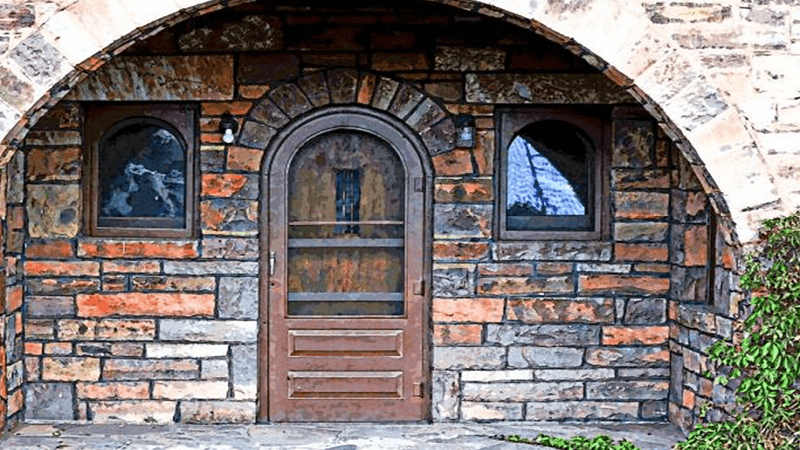
Most homeowners who want a more modern entryway assume the project requires real construction — new doors, replaced trim, possibly a reworked porch. In reality, the entryways that read as crisp and contemporary rarely owe their appearance to structural changes. They owe it to discipline. A handful of carefully coordinated decisions, made at the level of finishes and small hardware, will move an entry further toward a modern aesthetic than a six-figure renovation made without that same discipline. The work fits comfortably into a weekend or two and avoids the cost, mess, and timeline of permitted construction.
What Actually Makes an Entryway Read as Modern
Modern entryways do not look modern because of any single dramatic feature. They look modern because every visible piece — door hardware, lighting, address numerals, mailbox, planters, mat — shares a coherent visual language. The colors run in a tight palette. The finishes belong to the same family. The geometry leans clean and linear rather than ornate. When that coordination is present, the eye reads the entry as composed. When it is missing, even an expensive door looks misplaced.
This is the central insight that makes a renovation-free modernization possible. Most entries do not need new architecture; they need their existing pieces edited so they stop fighting each other. That work is largely about replacement and removal, and it almost never requires touching the underlying structure of the porch, door frame, or facade.
Start by Auditing What You Already Have
Before buying anything, walk to the curb and look at the entry the way a stranger would. Photograph it from several distances — sidewalk, driveway, the porch itself. Look at the photos rather than the entry directly, because the camera flattens the scene and exposes inconsistencies the eye glosses over in person. Note every visible piece of hardware: door handle, deadbolt, kickplate, sconces, address numerals, mailbox, doorbell, and any decorative elements like wreath hooks or porch furniture.
Two questions matter most in this audit. First, are these pieces all in the same finish family? Second, do any of them look noticeably worse than the others? The answers will identify the small list of items worth addressing.
What Upgrade Makes an Entryway Look Modern Fast?
Modern entryways rely on cleaner geometry, fewer decorative elements, and stronger visual contrast. Ornate plaques, faded decals, and crowded accessories often make an otherwise updated facade feel older than it is. Exterior hardware creates the strongest effect when finishes, spacing, and proportions follow the same architectural style. Many homeowners install Modern House Numbers because streamlined address numerals improve curb visibility, reinforce contemporary design lines, and create a sharper focal point near the entrance without requiring structural renovation.
Floating metal numerals add subtle depth through natural shadow lines that flat decals cannot produce. Matte black finishes pair naturally with dark window frames, modern sconces, and minimalist trim, while brushed stainless steel complements lighter stone, concrete, and neutral siding. Typography also changes how contemporary the exterior feels. Sans-serif numerals with balanced spacing maintain cleaner sight lines from the street and remain easier for guests, delivery drivers, and emergency responders to read. Placement matters as much as finish selection. Address numbers mounted against low-contrast surfaces lose visibility and weaken the architectural effect, especially during evening hours. Coordinated hardware strengthens the presentation further. When house numerals match nearby lighting fixtures, railings, or mailbox finishes, the entryway appears intentionally designed instead of assembled from unrelated pieces. Small upgrades rarely transform an exterior alone, but modern address numerals immediately change how the home presents from the sidewalk or curb.
The Edits That Move the Needle Without a Renovation
A handful of changes consistently produce outsized results on entries that are otherwise structurally sound. None of these requires a contractor or a permit, and most can be completed across a weekend.
Refinish the Front Door
The door itself is the largest visible element of any entryway, and a fresh coat of paint will often shift it dramatically. Modern entries tend to favor saturated, confident colors — deep charcoal, true black, dark green, dark navy, or warm white — applied in matte or satin finishes rather than glossy ones. The key is choosing a color that lives somewhere else on the facade already, even subtly. A door painted to match the gutters, window frames, or roof tones reads as deliberate; a door painted in an unrelated color reads as an experiment.
Replace the Door Hardware
Swapping out an aging knob set for a long bar pull or horizontal lever instantly modernizes the door. Coordinated entry sets — handle, deadbolt, and sometimes a kickplate, all from the same line and finish — solve the most common visual error in entryways, which is mismatched hardware on a single door. The replacement is straightforward DIY work, usually completed in under an hour with basic tools.
Update the Sconces
Lantern-style fixtures and decorative scrolls drag any entry toward a traditional aesthetic, regardless of what else is happening around them. Replace them with cylindrical, rectangular, or down-light fixtures whose finish matches the new door hardware. Most exterior sconce swaps require only a screwdriver, a wire nut, and the breaker turned off — not the kind of work that justifies a renovation budget. Pair the install with warm-white bulbs in the 2700K to 3000K range to flatter the exterior materials at night.
Address Numerals and Mailbox Coordination
Vinyl decals, brass scrolled numbers, and faded plaques are quiet contributors to a dated entryway. Solid metal numerals mounted with standoffs introduce shadow depth and clean typography that immediately register as contemporary. Match the numeral finish to whatever now runs through the door hardware and sconces. If the entry has a wall-mounted or post-mounted mailbox, repeat that finish on its numerals as well. The coordinated repetition is what produces the polished result.
Editing the Surroundings, Not Just the Hardware
An updated entry feels more deliberate when the area around it gets equivalent attention. A simple low-profile doormat in a neutral tone replaces an aging textured one. A pair of matching planters with structured plants — boxwood, sansevieria, ornamental grasses — frame the door without becoming visually busy. Outdated address plaques, decorative welcome signs, and seasonal hangings come down. The empty space these changes create is part of what makes the entry read as modern; contemporary design earns its calm partly through restraint.
For homeowners thinking about how these small updates contribute to broader property value, this look at how exterior upgrades improve both curb appeal and long-term home value walks through the connection between coordinated entry choices and resale impact.
Don’t Overlook the Mailbox
If the mailbox sits within view of the entry, treat it as part of the same composition rather than an unrelated curbside fixture. A faded plastic mailbox undermines a beautifully updated front door, while a cleanly finished one extends the design language to the property line. The Spruce has a useful collection of contemporary mailbox ideas that demonstrate how mailbox styling pulls together with the rest of an entry, particularly on homes where the unit is visible from the front door area.
A Note on Modern House Numbers
Modern House Numbers focuses specifically on the category of exterior hardware that does the most for renovation-free entry upgrades — address numerals and lettering. The catalog centers on clean contemporary typography, machined or cast metal construction, and finish options that map onto the most common modern entry palettes: matte black, brushed stainless, satin brass, bronze, and aluminum. Float-mount hardware produces the precise shadow lines associated with high-end exteriors, and sizing options accommodate everything from compact wall-mounted installations to larger curbside applications. For homeowners coordinating an entryway update without taking on construction, the brand offers the kind of finish quality and typographic discipline that holds up against the rest of a thoughtfully refreshed facade.
Final Thoughts
A modern entryway is rarely the result of major renovation. It is the result of small, coordinated edits made with attention to finish family, geometry, and restraint. Refresh the door color. Replace the hardware with linear contemporary forms. Swap dated sconces for cleaner fixtures. Install solid metal address numerals in a finish that lives across the rest of the entry. Strip away the visual clutter that accumulates around a front door over the years. None of this work requires permits, contractors, or significant disruption — but the cumulative effect at the curb is genuinely transformational. Modernizing an entryway, in the end, is less about adding new things and more about quietly aligning the things already there.