
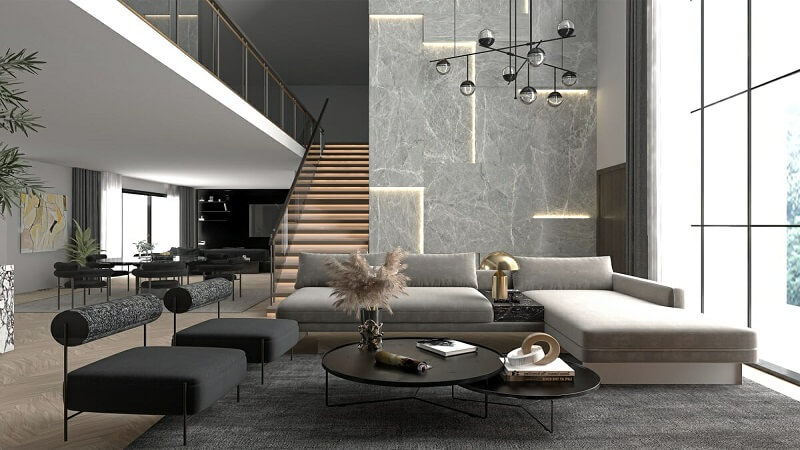
The world of interior design has undergone a remarkable transformation in recent years, driven largely by advances in digital technology. Among these innovations, 3D rendering has emerged as a powerful tool that reshapes how designers conceptualize, present, and execute their ideas. What once required sketches, mood boards, and a leap of imagination can now be visualized with stunning realism. This shift is not only improving creative workflows but also enhancing communication between designers and clients.
The rise of digital visualization in design
The growing demand for immersive presentations has led many studios to collaborate with a 3d visualisation company that specializes in producing lifelike imagery for interior concepts. Instead of relying on flat drawings or abstract descriptions, designers can now present fully realized environments with accurate lighting, textures, and spatial depth, making it easier for clients to understand the final outcome.
This evolution has significantly reduced the gap between concept and reality. Clients no longer need to interpret technical drawings or imagine how materials will work together. With detailed 3D renders, every element becomes visible, allowing for quicker decisions and a smoother design process.
Enhancing creativity and experimentation
One of the most exciting aspects of 3D rendering is the freedom it gives designers to experiment. In traditional workflows, making changes could be time-consuming and costly. Now, designers can quickly test different layouts, color schemes, and furniture arrangements without any physical constraints.
For example, a designer can present multiple variations of a living room, each with a different style or mood. This flexibility encourages creativity and innovation, as there is less risk involved in trying bold ideas. It also allows clients to explore options they might not have considered otherwise, leading to more personalized and satisfying results.
Improving client communication
Clear communication has always been a cornerstone of successful interior design projects. However, misunderstandings can easily arise when clients struggle to visualize abstract ideas. 3D rendering solves this problem by providing a shared visual language.
When a designer collaborates with a 3D visualization company, the company can deliver highly detailed images that closely align with the client’s expectations. These visuals eliminate ambiguity and ensure that everyone involved in the project is on the same page. Clients can give precise feedback, request adjustments, and feel more involved in the creative process.
This improved communication not only enhances the client experience but also reduces the likelihood of costly revisions during later stages of the project.
Saving time and resources
Efficiency is another major benefit of 3D rendering in interior design. By visualizing a space in advance, designers can identify potential issues before construction or implementation begins. This proactive approach helps avoid mistakes that could lead to delays or additional expenses.
For instance, problems related to space planning, lighting placement, or material compatibility can be spotted early in the design phase. Addressing these issues digitally is far more cost-effective than making changes on-site. As a result, projects can be completed more smoothly and within budget.
Additionally, 3D rendering streamlines the approval process. Since clients can clearly see what they are getting, they are more likely to approve designs quickly, reducing back-and-forth revisions.
Transforming marketing and presentation
Beyond the design process itself, 3D rendering has also revolutionized how interior design projects are marketed and presented. High-quality visuals are now a key component of portfolios, websites, and promotional materials.
Designers and brands use realistic renders to showcase their work in the best possible light, even before a project is completed. This is particularly valuable in industries like real estate and furniture design, where visual appeal plays a crucial role in attracting customers.
With advanced rendering techniques, spaces can be staged virtually, allowing potential buyers or clients to envision how a property or product will look in real life. This capability has become a powerful marketing tool that drives engagement and increases conversion rates.
The future of interior design with 3D rendering
As technology continues to evolve, the role of 3D rendering in interior design is only expected to grow. Innovations such as virtual reality and augmented reality are taking digital visualization to the next level, offering immersive experiences that go beyond static images.
Designers will be able to walk clients through virtual spaces, allowing them to interact with the environment and experience it in real time. This level of immersion will further enhance understanding and emotional connection, making the design process even more engaging.
Moreover, as rendering tools become more accessible, even smaller studios and independent designers will be able to leverage these capabilities, leveling the playing field across the industry.
Conclusion
3D rendering is transforming modern interior design in profound ways. From enhancing creativity and improving communication to saving time and revolutionizing marketing, its impact is undeniable. By bridging the gap between imagination and reality, it empowers designers to deliver better results and create more meaningful experiences for their clients.
As the technology continues to advance, it will undoubtedly open up new possibilities and redefine what is achievable in interior design. Those who embrace these tools today are not only staying competitive but also shaping the future of the industry.