
The home has changed. For millions of Canadian families, it’s no longer just where people live — it’s where they receive medical care, rehabilitation support, and daily health monitoring. Whether it’s an aging parent recovering from surgery, a family member managing a chronic condition, or a child with complex medical needs, in-home and community care has become one of the fastest-growing areas of health service delivery in Canada.
And that shift creates a very specific question: when something goes wrong inside someone’s home, who knows what to do?
For personal support workers, home health aides, healthcare students, and regulated health professionals working in community settings, HCP CPR certification isn’t optional — it’s a foundational professional requirement. And for family caregivers who find themselves providing regular support to a loved one, it’s quickly becoming one of the most practical skills they can hold.
What Is HCP CPR Certification and Who Is It For?
HCP stands for Healthcare Provider. It’s the CPR certification level designed specifically for people who work in — or provide care within — clinical and community health settings.
Unlike a standard CPR/AED Level C course, which is intended for the general public and workplace first responders, HCP CPR reflects the expectations of regulated health environments. It’s the certification level required by nursing programs, paramedicine courses, dental hygiene schools, respiratory therapy programs, and many other allied health professions as a prerequisite for clinical placement.
In practical terms, the HCP level covers:
- Two-rescuer CPR techniques — essential when a second trained person is present, as is common in home care and clinical settings
- Bag-valve-mask (BVM) ventilation — the resuscitation device most commonly used by healthcare workers
- CPR for adults, children, and infants — all age groups, at a clinical standard
- AED operation — automated external defibrillators are increasingly present in private residences and community care facilities
- Relief of choking across age groups
- Recognition of cardiac arrest and the physiological markers that precede it
The distinction from a layperson course is meaningful. HCP CPR is trained to a higher performance standard — deeper compressions, faster response initiation, and more precise technique — because the people holding this certification will use it in situations where the margin for error is narrowest.
Why Is This Relevant to Home and Community Care Settings?
Consider who delivers care inside private homes. Personal support workers (PSWs) make daily visits to clients who are elderly, post-operative, or managing serious chronic illness. Home health nurses conduct assessments and administer treatments. Occupational therapists guide rehabilitation in residential settings. Community paramedics respond to non-emergency calls that still involve medically complex patients.
Every one of these professionals works, for significant portions of their day, in an environment where backup is not immediately present. There is no crash cart in the hallway. There is no code team. There is a trained individual, a patient, and whatever they carry in their kit.
According to the Heart & Stroke Foundation, approximately 40,000 cardiac arrests occur outside of hospital settings in Canada each year. Survival rates drop by approximately 10% for every minute that passes without CPR. In a home environment, where an ambulance may take eight to twelve minutes to arrive, the first two to three minutes are entirely in the hands of whoever is in the room.
That person needs to be trained. Not trained in the general sense — trained at the HCP standard.
What About Family Caregivers?
This is where the conversation often surprises people.
Family members who provide regular, hands-on support to a loved one — bathing, medication management, mobility assistance, medical monitoring — are caregivers in every meaningful sense. Many do it without a professional title, without formal training, and without any preparation for the medical emergencies that can happen in that context.
An HCP CPR course is increasingly accessible to family caregivers, not just credentialed health workers. If you are providing regular care to someone with a cardiac history, respiratory condition, or significant frailty, the few hours required to earn this certification could be the most meaningful investment you make in their safety.
Ontario’s health system actively encourages caregiver competency. The Ontario Occupational Health and Safety Act governs formal workplace requirements for employed caregivers, and WSIB supports training investments in healthcare-adjacent occupations. But beyond the formal compliance landscape, there is simply the practical reality: the people who spend the most time with medically vulnerable individuals should be the most prepared to respond when something goes wrong.
How Do You Get HCP CPR Certified in Ottawa?
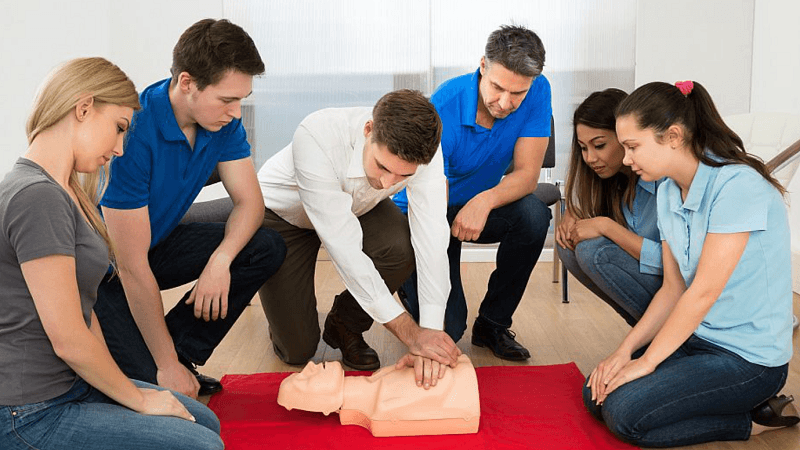
HCP CPR courses are available through approved providers who deliver training at the healthcare provider standard. The course typically involves both a theoretical component — covering cardiac arrest recognition, resuscitation science, and clinical protocols — and a hands-on practical session where participants perform compressions, BVM ventilation, and multi-rescuer techniques on manikins with instructor feedback.
Blended learning formats are available, allowing the theory component to be completed online in advance and the skills session to be completed in person. This is particularly convenient for healthcare students balancing clinical placement requirements with busy academic schedules, and for PSWs and home care workers managing irregular shift patterns.
For more on certification formats and scheduling options, you can visit their website to explore what’s available.
Keeping Certification Current
HCP CPR certification requires annual renewal. Unlike Standard First Aid — which carries a three-year validity — CPR skills are recognized to decay relatively quickly without practice, and the annual renewal cycle reflects that reality.
For healthcare students, most regulated health college programs will specify the renewal requirement as part of ongoing clinical readiness. For PSWs and community care workers, employers and placement agencies typically track certification currency as part of their compliance obligations. And for family caregivers, annual renewal is a small, low-cost commitment that keeps a critical skill sharp.
If you are looking for HCP CPR certification near the Rideau Street and King Edward Avenue corridor, Sandy Hill, or surrounding communities in the Ottawa area, you may reach out to Coast2Coast First Aid & Aquatics in that area.
FAQS
Q: What is the difference between CPR Level C and HCP CPR certification? A: CPR Level C is a standard certification designed for the general public and workplace first responders. It covers single-rescuer CPR and AED use for adults, children, and infants. HCP CPR is a higher-standard certification designed for healthcare providers — it adds two-rescuer techniques, bag-valve-mask ventilation, and is trained to the clinical performance expectations of regulated health professions. Many healthcare programs and employers require HCP level specifically.
Q: Is HCP CPR certification required for PSWs and home health aides in Ontario? A: Requirements vary by employer, placement agency, and program. Many personal support worker programs and home care agencies require HCP-level CPR certification as a condition of placement or employment. Healthcare students in nursing, paramedicine, and allied health programs are almost universally required to hold current HCP CPR certification before beginning clinical placements. Family caregivers are not legally required to hold certification but are strongly encouraged to do so.
Q: How long does HCP CPR certification last? A: HCP CPR certification is valid for one year and must be renewed annually. The renewal course is typically shorter than the initial certification, focusing on skills refresher and updated guidelines rather than full curriculum delivery.
Q: Can I take HCP CPR training using blended learning? A: Yes. Blended learning formats allow the theory component to be completed online at your own pace, with the hands-on practical skills session completed in person with a certified instructor. The resulting certification is equivalent to a traditional classroom course and meets the requirements of most healthcare programs and employers.
Q: Does HCP CPR certification meet Ontario WSIB requirements for healthcare employers? A: Healthcare employers in Ontario operating under the Occupational Health and Safety Act are required to maintain appropriate first aid coverage on site. HCP CPR certification is generally accepted as meeting — and exceeding — standard CPR requirements for healthcare workplace settings. Employers should confirm specific requirements with their WSIB guidelines and any relevant professional regulatory body.