
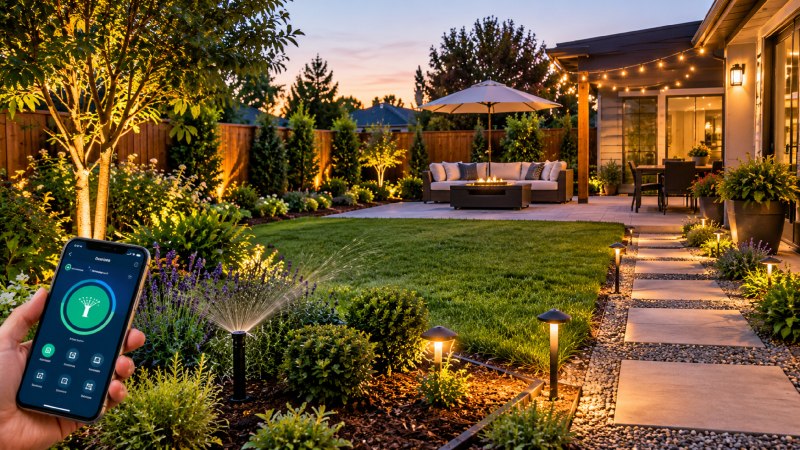
A beautiful backyard and a low-maintenance backyard used to feel like opposites. Lush plantings meant hours of watering and weeding, while easy-care yards often looked bare. Today, a thoughtful mix of smart home technology and smart design choices makes it possible to have both.
Whether you are refreshing a small patio or reworking an entire yard, these upgrades focus on one goal: an outdoor space that looks polished and inviting without demanding your weekends.
Start With a Plan, Not a Gadget
Before buying anything, walk your yard and note where your time actually goes. For most homeowners, the biggest chores are watering, mowing, weeding, and turning lights or features on and off. Each of these can be reduced with the right combination of design and technology.
Sketch a simple plan that marks sunny and shady areas, existing beds, lawn, seating zones, and where outdoor power and water spigots are located. This makes it much easier to choose upgrades that work together instead of a collection of disconnected devices.
Upgrade 1: Automated Watering That Responds to Conditions
Watering is often the most time-consuming backyard task, and it is also where a lot of water gets wasted. According to the EPA’s WaterSense program, residential outdoor water use in the United States accounts for nearly 8 billion gallons of water each day, mainly for landscape irrigation, and experts estimate that as much as 50 percent of that water is wasted due to overwatering caused by inefficient irrigation methods and systems.
Smart watering tackles that problem directly. Instead of running on a fixed clock, a connected controller can adjust to rain, soil moisture, or local weather. The EPA also notes that replacing a standard clock-based controller with a WaterSense labeled irrigation controller can save an average home up to 15,000 gallons of water annually.
For homeowners who water with hoses, drip lines, or a few in-ground zones, an app-controlled smart irrigation setup with soil and weather sensors, such as the one from RainPoint, is one option that lets you schedule, pause, and monitor watering from your phone.
What to Look For in a Smart Watering Controller
- Weather awareness: The ability to skip or delay watering when rain is in the forecast.
- Soil moisture sensing: Sensors that trigger watering based on actual conditions at the root zone.
- Multiple zones: Separate schedules for lawn, flower beds, vegetable gardens, and containers.
- Remote control: App access so you can adjust schedules while traveling or before hosting.
- Smart home compatibility: Integration with voice assistants or routines you already use, if that matters to you.
From a design perspective, the best part is that smart watering is largely invisible. Drip lines tuck under mulch, controllers mount neatly near a spigot or on a wall, and the plants simply look healthier.
Upgrade 2: Smart Outdoor Lighting
Lighting transforms a backyard after dark and adds a sense of safety and polish. Smart bulbs, dusk-to-dawn fixtures, and app-controlled landscape lighting eliminate the daily chore of flipping switches.
Layer your lighting for both function and atmosphere:
- Path lights to guide guests safely along walkways.
- Uplighting on trees or architectural features for drama.
- Soft string lights or lanterns over seating and dining areas.
Set lights on schedules or sunset-based routines, and group them by zone so you can light the patio without illuminating the whole yard.
Upgrade 3: A Low-Maintenance Plant Palette
Technology helps, but plant choice matters just as much. Choose plants suited to your climate, sun exposure, and soil so they thrive with minimal intervention. Native and regionally adapted plants are often a good place to start, and your local cooperative extension office can recommend options for your area.
A few design principles keep maintenance low:
- Group plants with similar water and sun needs so one watering schedule fits each bed.
- Favor shrubs, ornamental grasses, and perennials over annuals that need replanting each year.
- Leave room for mature size so you are not constantly pruning plants that outgrow their space.
- Repeat a limited palette of plants for a cohesive, designer look that is easy to care for.
Upgrade 4: Hardscaping and Mulch That Cut Down on Chores
Reducing the amount of lawn you have to mow is one of the most effective ways to lighten your workload. Consider replacing hard-to-maintain patches of grass with patios, gravel seating areas, stepping-stone paths, or generously mulched planting beds.
Mulch deserves special mention. A 2- to 3-inch layer helps suppress weeds, keeps soil cooler, and slows evaporation, which means less watering and less weeding. Choose a color and texture that complements your home’s exterior, such as dark shredded bark for a classic look or decorative stone for a modern, minimal yard.
Edging is another small upgrade with a big visual payoff. Steel, stone, or brick borders keep mulch in place, stop grass from creeping into beds, and give the whole landscape a crisp, finished appearance.
Upgrade 5: Smart Plugs and Outdoor-Rated Devices
Outdoor-rated smart plugs are an inexpensive way to automate features you already own. Use them to schedule fountains, pond pumps, string lights, or patio heaters. Many can be controlled by voice or grouped into routines, so a single “evening” command can turn on lighting and a water feature together.
Always choose devices rated for outdoor use, plug into GFCI-protected outlets, and keep connections protected from standing water.
Keeping the Tech Invisible
The most successful smart backyards do not look like tech showcases. A few design tips help everything blend in:
- Run low-voltage wiring and drip tubing under mulch or along fence lines.
- Choose fixtures and controllers in finishes that match your exterior, such as matte black, bronze, or neutral gray.
- Hide hubs and controllers behind planters, in utility areas, or inside weatherproof enclosures.
- Let plants soften the edges of hardscape and equipment.
Phasing Your Upgrades
You do not have to do everything at once. A practical order for most yards looks like this:
- Phase 1: Automate watering and add mulch, since these deliver the biggest time savings right away.
- Phase 2: Add smart lighting and smart plugs for comfort and ambiance.
- Phase 3: Gradually replace high-maintenance lawn and plants with hardscape and easy-care plantings.
Final Thoughts
A low-maintenance backyard is not about doing less with your outdoor space. It is about letting smart design and a few well-chosen devices handle the repetitive work, so the yard looks cared for even when you are busy.
Start with the chores that take the most time, choose upgrades that work together, and build from there. The result is a backyard that feels like an extension of your home and one you will actually have time to enjoy.