
Urban Flooding and the Demand for Adaptive Waterfronts
Municipal waterfronts are increasingly serving as the frontline against climate volatility and rising sea levels. Traditional rigid infrastructure—such as fixed concrete seawalls and timber piers—was engineered for predictable tidal baselines that no longer exist. Consequently, these static systems are experiencing accelerated mechanical fatigue and frequent inundation during storm surges.
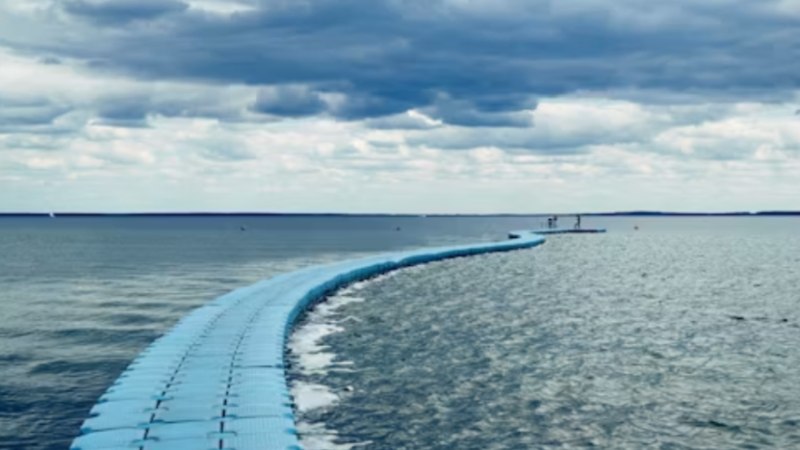
As urban planners face unprecedented challenges with water level fluctuations and extreme weather events, the paradigm of waterfront architecture is shifting from rigid resistance to dynamic adaptation. Recent structural evaluations of modern Hiseadockreveal that industrial-grade modular polymer arrays can seamlessly adapt to drastic tidal shifts without compromising load-bearing integrity.
By utilizing interlocking high-density polyethylene, these systems dissipate wave energy dynamically, preventing the localized structural fatigue that typically degrades static concrete and timber installations. This transition from static defense to hydrodynamic compliance represents a critical evolution in how resilient urban planning integrates with complex marine environments.
Material Science: Why High-Molecular-Weight HDPE is Replacing Concrete and Timber
The foundational flaw of legacy marine construction lies in material vulnerability to continuous aquatic exposure. Marine-grade concrete remains inherently porous, leading to salt ingress and rebar corrosion, while treated timber inevitably succumbs to biological decay and rot.
To circumvent these material failures, engineers are standardizing the use of High-Molecular-Weight Polyethylene (HmwHDPE). This advanced thermoplastic polymer delivers superior structural persistence and chemical neutrality in highly abrasive environments.
Tensile Strength and Load-Bearing Dynamics
HmwHDPE achieves its exceptional structural integrity through a highly dense, cross-linked molecular matrix. This architecture allows the material to support immense static loads without the permanent deformation common to lower-grade plastics.
Professional-grade modular systems easily exceed a load-bearing threshold of 350 kg/m², safely accommodating heavy pedestrian traffic and municipal maintenance equipment. The structural secret lies in the interlocking elastomer connecting pins, which actively distribute localized kinetic stress and shear forces across the entire floating grid.
UV Resistance and Molecular Inertness in Harsh Environments
Beyond mechanical load capacity, floating infrastructure must survive continuous exposure to harsh elemental degradation. HmwHDPE is engineered with specialized carbon black stabilizers that block ultraviolet radiation, effectively preventing surface chalking and material Embrittlement over decades of direct sunlight.
Furthermore, the polymer is entirely chemically inert. It remains unaffected by aggressive saltwater corrosion, marine fuel spills, or sub-zero temperatures dropping as low as -30°C, ensuring uninterrupted structural performance in both glacial rivers and tropical saltwater ports.
TCO & Performance Matrix: HmwHDPE vs. Traditional Marine Materials
| Metric | HmwHDPE Modular Systems | Marine-Grade Concrete | Treated Timber |
| Installation Time | Days (Tool-less interlocking) | Months (Curing & heavy machinery) | Weeks (Pile-driving & carpentry) |
| Maintenance Frequency | Negligible (Self-cleaning) | High (Crack sealing & rebar checks) | High (Chemical retreating) |
| Eco-toxicity | Zero (Inert & 100% recyclable) | Moderate (High carbon footprint) | High (Chemical leaching) |
| Average Lifespan | 20 – 30+ Years | 15 – 25 Years | 8 – 12 Years |
Rapid Deployment and Lifecycle Cost Efficiency (TCO)
The financial viability of municipal infrastructure is determined by long-term financial modeling rather than isolated initial capital expenditures. Evaluating the Total Cost of Ownership (TCO) heavily favors modular polymer systems over traditional construction methodologies.
- Elimination of Heavy Machinery: Modular floating arrays do not require underwater pile-driving, dredging equipment, or specialized marine cranes for deployment.
- Drastic Labor Reduction: The interlocking pin design allows small municipal crews to assemble and anchor large surface areas in a fraction of the time required for pouring concrete.
- Zero-Maintenance Cycles: HmwHDPE requires no anti-corrosive painting, chemical sealing, or biological scrubbing, effectively eliminating annual maintenance budgets.
- Scalability and Reconfiguration: As waterfront demands evolve, modular systems can be easily unpinned, reconfigured, or expanded without destroying the existing structural asset.
Environmental Impact and Ecological Compliance
Modern marine engineering must align with strict global environmental mandates designed to protect vulnerable aquatic ecosystems. Traditional construction techniques often inflict irreversible damage; deep-water dredging and acoustic pile-driving severely traumatize marine life and disrupt local habitats.
Furthermore, treated timber actively leaches toxic preservatives (like CCA) into the water column, threatening marine food webs. Conversely, HmwHDPE is a non-toxic, food-grade material that creates zero chemical runoff, aligning perfectly with modern sustainable engineering frameworks.
Beyond structural resilience, the shift towards modular polymer infrastructure is heavily driven by stringent ecological mandates. Traditional marine construction, particularly dredging and pile-driving, causes severe turbidity and permanent destruction of Benthic habitats.
According to framework reports published by theEuropean Environment Agency (EEA), adopting non-invasive, eco-friendly infrastructure solutions is critical for preserving aquatic biodiversity while adapting urban coastlines and riverbanks to changing climate realities.
Procurement Specifications for Municipal Planners
To guarantee structural safety and maximize municipal ROI, civil engineers must enforce strict technical specifications when sourcing floating polymer infrastructure. Planners should mandate the following baseline parameters in all public procurement documents:
- Load Capacity Verification: Systems must demonstrate certified buoyancy testing proving a minimum distributed load support of 350 kg/m² prior to submersion.
- Tensile Strength of Connectors: Elastomer pins and fastening hardware must pass extreme high-shear and tensile stress tests to ensure grid stability under severe wave action.
- Thermal Tolerance Range: The polymer formulation must be laboratory-certified to retain molecular stability between -30°C and 70°C.
- Surface Friction Coefficient: All pedestrian-facing surfaces must feature an engineered, molded anti-slip texture to maintain high friction in wet or freezing conditions.
- Environmental Certifications: Manufacturers must provide documentation proving the material is chemically inert, non-toxic, and 100% recyclable at the end of its lifecycle.