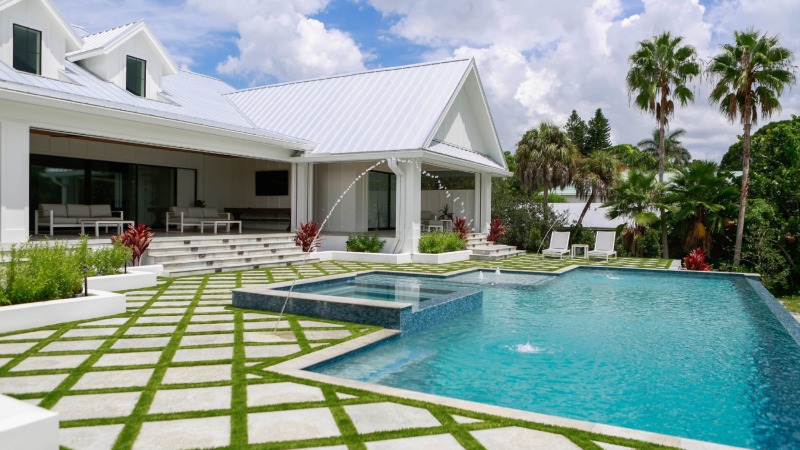
If you have spent any time looking at real estate listings along Florida’s Gulf Coast over the past two years, you have probably noticed a pattern. The homes that sell fastest and command the strongest offers almost always share one thing in common: polished, well-maintained outdoor living areas. We are not talking about a fresh coat of paint on the front door. Buyers in Sarasota, Bradenton, Venice, and the surrounding barrier island communities are making purchase decisions based on the condition of driveways, pool decks, lanais, and paver patios long before they step inside the house.
The Curb Appeal Equation Has Changed
There was a time when curb appeal meant trimmed hedges and a manicured lawn. That definition has expanded considerably, particularly in coastal Florida where outdoor square footage often rivals indoor square footage. Hardscaped surfaces like travertine patios, brick driveways, and interlocking paver walkways now carry enormous visual weight in a buyer’s first impression. When those surfaces look faded, stained, or neglected, it signals deferred maintenance to prospective buyers, and that perception can shave thousands off an offer price.
Real estate agents working the Sarasota County market have started advising sellers to address their hardscaping before listing. The logic is straightforward. A freshly sealed paver driveway photographs beautifully for MLS listings, creates a strong impression during showings, and communicates to buyers that the homeowner has taken care of the property from the outside in. In a market where inventory is tightening and buyers are becoming more selective about condition, that kind of detail separates a home that sells in the first weekend from one that lingers for sixty days.
What Paver Sealing Actually Does for a Property
For homeowners who have never gone through the process, paver sealing can sound like a cosmetic luxury. It is not. The procedure involves cleaning the paver surface thoroughly, stabilizing the joint sand between each unit, and then applying a protective sealant that guards against UV damage, moisture intrusion, weed growth, and color fading. In a climate like Sarasota’s, where afternoon thunderstorms batter hardscaping for six months of the year and the sun bleaches everything it touches, that layer of protection is the difference between pavers that hold their color for years and pavers that look ten years old after three.
Sealed pavers also resist staining from organic debris, which is a constant battle in Florida. Oak pollen, palm berries, leaf tannins, and irrigation minerals all leave marks on unsealed surfaces. Once a sealant is in place, those substances sit on top of the protective layer rather than absorbing into the porous stone, which makes routine cleaning far simpler and keeps the surface looking consistent season after season.
Choosing the Right Contractor Matters More Than You Think
One of the biggest mistakes homeowners make with paver maintenance is hiring whoever shows up first with a pressure washer and a bucket of sealer. The quality gap between a rushed, poorly executed sealing job and a professional one is enormous. Improper cleaning can damage the paver surface. Using the wrong sealant type for the specific stone material can cause hazing, peeling, or a finish that turns white when it gets wet. Skipping the joint sand stabilization step means weeds will push through within months, undermining the entire investment.
Homeowners in the Sarasota area who want the job done the first time correctly should look for a contractor with documented experience on the specific paver type installed on their property. Travertine requires different preparation and product selection than brick or concrete pavers. A company that offers reliable paver sealing will walk you through the product options, explain the difference between water-based and solvent-based sealants, and set realistic expectations about drying times, finish appearance, and longevity before any work begins. That kind of transparency is a reliable indicator that you are dealing with professionals rather than a crew that picked up sealing as a side hustle.
The Investment Case for Homeowners and Investors Alike
From a pure return-on-investment perspective, paver sealing is one of the most cost-effective exterior improvements a homeowner can make. The typical cost to seal a standard driveway and pool deck on a Sarasota-area home runs a fraction of what a landscaping overhaul or exterior paint job would cost, yet the visual impact is comparable. For real estate investors managing rental properties or flipping homes in the Gulf Coast corridor, sealing hardscaped surfaces is a line item that consistently pays for itself at the closing table.
Short-term rental owners on Siesta Key, Longboat Key, and Lido Key have also caught on. Guests booking vacation homes notice outdoor aesthetics immediately, and reviews frequently mention the condition of pool decks, patios, and entryways. A sealed, clean outdoor area photographs better for listing platforms and holds up under the heavy foot traffic that vacation rentals endure. Property managers who schedule sealing on a two-to-three-year cycle report fewer guest complaints about stained or slippery surfaces and spend less on reactive cleaning between turnovers.
Timing Your Project Around the Florida Climate
Florida’s weather creates a narrow window for ideal sealing conditions. The dry season, roughly November through April, offers the most predictable results because sealants need twenty-four to forty-eight hours of dry conditions to cure properly. Scheduling a sealing project during the summer rainy season is not impossible, but it requires a contractor who monitors weather closely and can work around afternoon storm patterns. Morning applications with enough lead time before typical three o’clock showers can work, but the margin for error is thin.
For sellers preparing a home for market, the best strategy is to schedule sealing four to six weeks before listing photos are taken. That gives the sealant time to fully cure and settle into its final appearance, and it ensures the surface looks its absolute best in the images that will form most buyers’ first impressions of the property.
The Bottom Line
The Gulf Coast real estate market rewards attention to detail. Buyers and renters are drawn to properties that feel maintained, intentional, and move-in ready from the moment they pull into the driveway. Paver sealing is not glamorous, and it is rarely the first improvement homeowners think of, but it is one of the most visible and cost-effective ways to elevate a property’s exterior presentation. Whether you are a homeowner preparing to sell, an investor protecting a rental asset, or simply someone who wants their home to look its best, keeping your hardscaped surfaces sealed and protected is one of the smartest maintenance decisions you can make in this climate.