
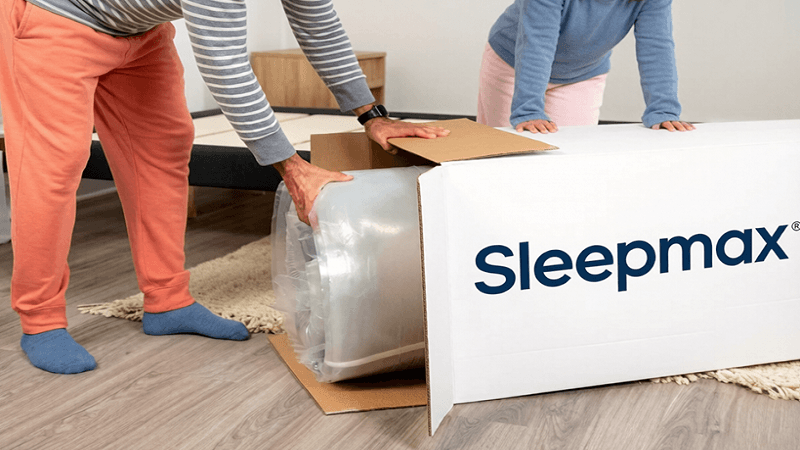
As the global mattress in a box market is projected to reach approximately $10.7 billion in 2024, with an annual growth rate remaining above 6%, more and more people are buying mattresses they’ve never touched—from brands they’ve never heard of. This model works—it eliminates showroom markups and avoids the shopping experience in a retail store lit by fluorescent lights. But it also carries a unique risk: you’re making a purchasing decision that will last 7 to 10 years based on a spec sheet that lacks the key data that truly predicts durability.
This guide will help you understand the key factors you should really focus on when choosing the best mattress in a box—rather than marketing hype. Instead, it focuses on the specifications, material trade-offs, and common purchasing pitfalls found across different price ranges.
Why Mattress in a Box Has Become So Popular
The answer isn’t just “convenience,” though that’s part of it. The real structural shift happened because of three things converging at once.
First, logistics. Compressing a mattress to a quarter of its original volume drops shipping costs by an estimated 60-70% compared to flat delivery. That math alone rewrote the unit economics — a single truck carries dozens of boxed mattresses instead of a handful.
Second, the trial period removed the biggest barrier to online mattress shopping. The standard 100-night free-return policy gives buyers permission to spend $1,000+ without fear of being stuck. Sleep Foundation survey data puts the purchase-likelihood boost from risk-free trials at 20-40%.
Third, the DTC model genuinely lowered prices. Traditional retail carries a 5-7x markup from factory cost to showroom floor. DTC brands operate at 2-3x — a mattress that would retail for $2,000 sells online for $900-$1,200 with comparable materials.
Fourth, buying a mattress online saves time and isn’t limited by where you live.
The trade-off is that you’re placing an order before trying it out. The online return rate for all-foam mattresses is 8% to 15%, while the return rate at physical stores is only 2% to 3%.
Different Types of Mattress in a Box
Not all boxed mattresses are pure foam. The category has split into three distinct types, each with different physics under the covers.
Memory Foam
Memory foam was originally used for cushioning in airplane seats. Its technical name—viscoelastic polyurethane—was developed in 1966 under a contract with NASA. It absorbs pressure by causing its cellular structure to collapse when localized force is applied, thereby distributing the force over a wider surface area. For this reason, it had become the standard material for preventing pressure ulcers in hospitals before Tempur-Pedic transformed it into a consumer product.
The key indicator of memory foam quality is density. Low-density foam (1.0–1.5 pounds per cubic foot) will age within one to two years. Medium-density foam (1.8–2.5 pounds per cubic foot) can last three to five years. High-density foam (3.0+ pounds per cubic foot), on the other hand, can last seven to ten years or more. CertiPUR-US certification—which most brands prominently display—attests to a product’s chemical safety and low VOC emissions. However, this certification does not address density or durability. A cheap foam that is bound to sag within 18 months could very well be CertiPUR-US certified.
Hybrid
Hybrid mattresses combine a support core of individually pocketed springs with a comfort layer of foam or latex. Currently, in the U.S. mattress retail market for mattresses priced over $1,000, this category accounts for approximately 62% of total sales—offering the pressure-relieving benefits of foam along with the breathability and responsiveness of springs.
Key spring specifications to consider include: wire gauge (the lower the number, the thicker the wire, and the greater the support), the number of springs, and perimeter reinforcement. A mattress made with No. 14 wire and 1,000 springs outperforms one made with No. 16.5 wire and 2,000 springs—despite decades of marketing claims suggesting the opposite, the number of springs alone does not determine quality.
Hybrid mattresses are also designed to be cooler. The spring layer creates a continuous airflow through the support core, which remains the most effective heat-dissipation mechanism of any mattress. Additionally, hybrid mattresses can incorporate other heat-dissipation technologies, such as PCM cooling.
Latex
Latex mattresses are the champions of durability. Ten years of satisfaction data from *Consumer Reports* consistently show that latex mattresses receive the highest ratings for durability. However, there are labeling issues within the latex mattress category.
Latex is classified into two types based on the manufacturing process. 1. Dunlop latex: Derived from the original process dating back to 1929—it has a higher density and firmer texture, making it more suitable for use as a support layer. 2. Talalay latex: The Talalay process involves vacuum expansion and rapid freezing before vulcanization, resulting in a softer, more uniform cellular structure that is ideal for use as a comfort layer. Synthetic latex (SBR) is derived from petroleum and is often blended with natural latex, though this is not specified on the label. Mattresses labeled simply as “latex” without further clarification may contain up to 70% synthetic latex. If you wish to purchase pure natural latex, look for brands that include “Natural latex” in their name.
Certification is another area to be wary of. GOLS (Global Organic Latex Standard) is widely recognized as the industry’s highest standard—it requires an organic rubber content of at least 95% and conducts audits of plantations and factories. However, some brands only certify the 1-inch-thick comfort layer, yet market the entire mattress as “GOLS-certified”. When making a purchase, be sure to ask which specific part of the mattress is certified. It’s also worth noting that, due to the Sri Lankan government’s strict export grading system, latex produced there consistently ranks at the top in natural rubber purity tests. Latex production in Malaysia is more industrialized and offers consistent quality, but it tends to have a higher proportion of blends. The country of origin is crucial.
What Makes the Best Mattress in a Box?
There are six key factors that distinguish a good mattress from a poor one. These characteristics aren’t equally important to every sleeper—which one you should prioritize depends on what exactly is disrupting your sleep.
Edge Support. If you sit on the edge of the bed to put on shoes, or sleep near the perimeter, edge support isn’t a nice-to-have. Three designs exist: foam encasement (a high-density foam perimeter that loses compression over five to seven years), border rod (a steel rod along the perimeter — more durable, firmer feel), and tempered perimeter coils (the outermost coils use thicker-gauge wire — the most elegant solution, but rare outside premium tiers). Hybrid and latex mattresses consistently outperform all-foam models on edge support.
Motion Isolation. If you share a bed, this is non-negotiable. Memory foam isolates motion better than any other material — the viscoelastic structure absorbs kinetic energy rather than transmitting it. Pocketed coils in hybrids also isolate well because each coil moves independently. Traditional interconnected coil systems (Bonnell, continuous coil) are the worst performers here and are rarely used in boxed mattresses.
Pressure Relief. This is where foam density and ILD (Indentation Load Deflection) interact. ILD measures the pounds of force required to compress a 4-inch foam sample by 25%. But here’s the catch that most guides skip: an ILD of 20 feels completely different in memory foam versus HR foam versus latex. Comparing ILD numbers across material types is comparing unrelated measurements. Stick to sleep-position-specific guidance instead (covered in the next section).
Cooling. The mattress industry’s cooling claims are where marketing most aggressively outpaces physics. Gel-infused memory foam provides a genuine cooling effect for roughly 15-30 minutes — the gel beads absorb heat until reaching body temperature equilibrium, then go thermally neutral. PCM (phase-change material) covers work identically: they absorb heat while transitioning from solid to liquid at around 28-32°C, then stop. Once that transition finishes — typically within 20-45 minutes — you’re sleeping on thermally neutral material until morning.
What actually sustains cooling through the night: airflow (coil systems, open-cell foam, latex), moisture-wicking cover fabrics, and graphite-infused foam, which has genuinely higher thermal conductivity rather than temporary heat absorption. If sleeping hot is a persistent issue, a hybrid beats all-foam every time.
Trial Period. The standard is 100 nights. Longer trials (365 nights) are mostly marketing — roughly 80% of return decisions happen in the first 30-60 nights. What matters more than length: who handles pickup, whether restocking fees apply, and where the mattress goes. Only about 20% of returns are resold or donated. The rest hit landfills, at a processing cost of $75-200 per unit. “Risk-free” isn’t cost-free — the bill just doesn’t land on your doorstep.
Warranty. Standard coverage runs 10 years, but most warranties only activate when body impressions exceed 1 to 1.5 inches. A 1-inch sag at year four is frustrating — and probably not covered. Proper foundation is also required: a sagging box spring or slats spaced more than 3 inches apart can void the claim. Read the terms before you need them.
How to Match a Mattress to Your Sleeping Position
Your sleeping position determines which mattress features actually affect your sleep quality and which ones are just noise.
Side Sleepers. Side sleeping concentrates body weight on the narrowest surface areas — shoulder and hip — which means pressure relief is the dominant requirement. Without enough give in the comfort layer, the shoulder and hip compress against the support core, triggering micro-arousals that shift you to a different position. A comfort layer in the ILD 10-20 range (soft to medium-soft) typically works best for sleepers under 180 pounds. Heavier side sleepers need a slightly firmer comfort layer to prevent the hip from sinking past the support layer — the “hammocking” effect that flexes the spine laterally.
Back Sleepers. Back sleeping distributes weight more evenly, so the priority shifts from pressure relief to spinal alignment. The lumbar region needs support, not sink. Medium to medium-firm mattresses (ILD 22-32 in the transition layer) maintain the natural lumbar curve without creating gaps. Hybrids perform especially well here because the coil support core provides the consistent resistance that foam alone often can’t deliver across the entire back surface.
Stomach Sleepers. Stomach sleeping puts the lumbar spine in extension. Without enough support, the midsection sinks into the mattress, hyperextending the lower back. This is the position most sensitive to mattress choice — get it wrong and lower back pain is almost guaranteed. A firm surface (ILD 32+ in the support layer) keeps the hips elevated and the spine aligned. Memory foam is generally the worst choice for stomach sleepers; latex and hybrid mattresses with firmer configurations work better.
Combination Sleepers. If you shift between positions through the night, responsiveness matters more than any single firmness characteristic. A mattress that responds quickly — latex or a responsive hybrid — makes it easier to change positions without fighting the material. Slow-recovery memory foam creates a “stuck” feeling that can wake combination sleepers during position shifts. The compromise position: medium-firm hybrid with a latex or responsive foam comfort layer, which handles all four sleeping positions adequately without excelling at any single one.
Common Buying Mistakes
The most expensive mistake is fixating on firmness labels. “Medium-firm” is not a specification — it means whatever the brand wants it to mean. Two mattresses both labeled medium-firm can feel completely different, because no industry standard exists for the term.
The second: It’s unrealistic to expect that a trial period will reveal every issue. A mattress that feels great during the first 30 days may start to sag by the third year. The trial period only tests immediate comfort, not durability. Foam density—which is almost never listed on product pages—is the key indicator for predicting how the mattress will perform in its fifth year. If a brand is reluctant to disclose the density of each foam layer when asked directly, take note of that silence.
Third: Buying the cheapest option in a category. The math on a $300 queen mattress doesn’t work. At that price, foam is almost certainly under 1.5 lb/ft³ — you’re buying an 18-month rental, not an 8-year mattress. The sweet spot for durable boxed mattresses is roughly 700-1,200 for a queen. Below that, material quality gets cut somewhere.
Fourth: Ignoring body weight. A mattress that reviews call “medium” will feel soft to a 250-pound sleeper and firm to a 120-pound one. Under 130 pounds skews toward softer comfort layers (ILD 10-20). Between 130-230 pounds: medium to medium-firm. Over 230 pounds needs a firm support core — ideally coils — and a comfort layer thick enough to prevent bottoming out.
One more thing: the sense-of-urgency trap. Mattress brands are always running promotions. That “40% off—today only” banner isn’t a real deadline. I’ve been tracking the pricing of more than twenty DTC brands for years, and in almost every case, the promotional price is the actual price.
Final Thoughts
Mattress in a box are a great way to buy a mattress—strangely enough, as long as the foam density is high enough and the brand manages its supply chain timelines responsibly, this compressed packaging doesn’t actually affect durability as much as most people imagine. The real advantage of this sales model lies not in the box itself, but in more reasonable pricing, longer trial periods, and access to material specifications—information that traditional retail salespeople rarely know and are even less likely to share proactively.
The key is that you must actually make use of this information. Ask about foam density; verify the specific certification standards applicable to each layer of material, not just the certifications the brand touts; choose a mattress based on your weight and sleeping position, rather than just the firmness label. If a brand is unwilling to answer even simple questions about material specifications, you should treat it the same way you would a car dealer who refuses to let you look under the hood.
The mattress won’t do all this for you. But now, you know what to look for.