
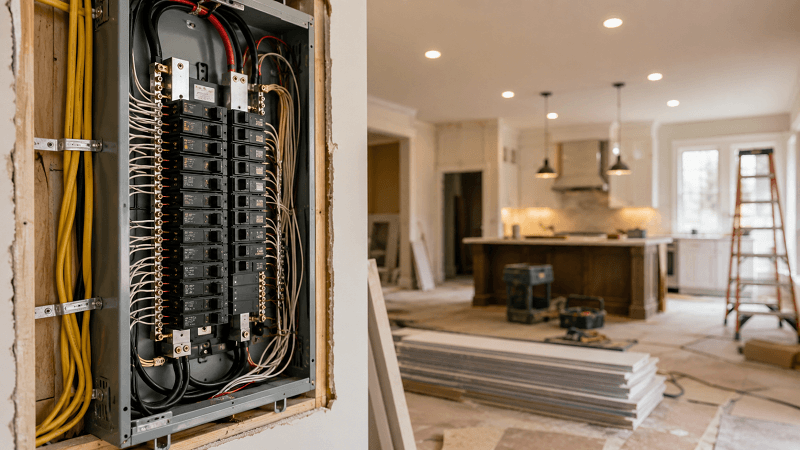
Renovating a home is exciting in the same way opening a mystery box is exciting. You start with paint colours, cabinet finishes, flooring samples, Pinterest boards, and a brave little budget that believes it can survive. Then a wall comes down, someone finds old wiring, your dream kitchen suddenly needs more power than your current panel wants to give, and the “simple upgrade” starts behaving like a full family drama.
That is why electrical planning should never be treated as an afterthought.
Before new drywall goes up, before the bathroom tiles arrive, before the basement turns into a home theatre, gym, office, guest suite or all four at once, your electrical system deserves a serious look. Not a quick glance. A proper look.
For Edmonton homeowners, this matters even more because many homes carry a mix of older wiring, newer appliances, cold-weather demands, basement development plans, garage projects, outdoor lighting needs and growing interest in EV chargers. Renovation is the perfect time to fix weak spots, add capacity and make the house safer, smarter and easier to live in.
Working with licensed residential electrical services Edmonton homeowners can trust is one of the smartest early moves before a renovation begins. It helps you understand what your home can handle, where the electrical system may be falling short and what should be handled before everything is sealed behind fresh walls and expensive finishes.
Start With An Electrical Inspection
Before you choose pendant lights or argue over whether brushed nickel is “dead,” start with an electrical inspection.
A renovation changes how a home is used. A kitchen may get more appliances. A basement may become living space. A bathroom may need new ventilation, heated flooring, better lighting and protected outlets. A garage may need power tools, a freezer, security lighting or an EV charger. These changes all place fresh demand on wiring, breakers, outlets and the main electrical panel.
An inspection can bring up things most homeowners would never notice on their own: tired wiring, overloaded circuits, loose connections, weak grounding, cracked outlets, old breaker panels, missing GFCI protection, aluminum wiring concerns, poor lighting layout or past DIY work that should have never happened in the first place.
And yes, almost every older home has at least one electrical surprise hiding somewhere. Sometimes it is harmless. Sometimes it is the kind of thing that makes an electrician pause and say, “Well, that’s interesting,” which is rarely a sentence homeowners enjoy hearing.
Getting the inspection done early means you can plan properly instead of cutting into finished surfaces later.
Upgrade The Electrical Panel Before It Becomes A Problem
Your electrical panel is not glamorous. Nobody posts selfies with it. But it quietly decides how much your home can safely handle.
Many renovations add electrical load without homeowners realising it. A modern kitchen may include a dishwasher, microwave, induction range, fridge, freezer, wine cooler, under-cabinet lighting, garburator, range hood, coffee station and half a dozen small appliances waiting for their turn on the counter. Add a finished basement, a hot tub, air conditioning, heated floors, smart devices or EV charging, and the demand can rise quickly.
If your panel is already close to capacity, your renovation may need a panel upgrade or service upgrade. This is especially important if you are moving from an older 60-amp or 100-amp setup to a more demanding modern lifestyle.
A panel usually gives small warnings before it becomes a real renovation headache. Breakers that trip too often, lights that dip when larger appliances start, a faint buzz near the panel, warm spots, an old fuse box or no free breaker space left can all point to a system that is already working too hard. If your renovation adds a kitchen circuit, basement wiring, EV charger, hot tub, heated floor or major appliance, the panel should be checked before the work goes any further.
A proper load calculation can show whether your existing panel is enough or whether an upgrade is the safer long-term choice.
Add Dedicated Circuits Where They Actually Matter
One of the biggest renovation mistakes is expecting old circuits to support new rooms.
Some appliances should not be asked to share power like roommates fighting over one bathroom. A dedicated circuit gives heavier-use equipment its own proper supply, which helps prevent nuisance trips and keeps the appliance running the way it should. Fridges, dishwashers, microwaves, laundry machines, sump pumps, garage tools, basement equipment and EV chargers are common examples where separate circuits often make far more sense.
Think about how people actually live now. A home office may run computers, monitors, chargers, printers, lighting, routers and backup power units. A media room may need power for a large TV, sound system, gaming console, projector, streaming devices and lighting controls. A kitchen island may need outlets for mixers, laptops, phones, air fryers and whatever new appliance becomes popular next month.
Good electrical planning looks at daily habits, not just room dimensions.
Improve Kitchen Electrical Layout
Kitchen renovations are beautiful, expensive and very unforgiving when electrical planning is weak.
The kitchen is one of the hardest-working electrical zones in any home. It needs safe outlet placement, proper appliance circuits, strong lighting, code-compliant wiring and enough capacity for modern cooking habits. A kitchen that looked fine in 1998 may not be ready for today’s appliance-heavy routines.
Before renovation work begins, consider outlet locations, under-cabinet lighting, island receptacles, appliance circuits, range hood wiring, dishwasher power, microwave placement, pantry lighting, USB charging points and smart switch options.
Also think about where people naturally plug things in. If the only available outlet is behind a fruit bowl, under a cabinet corner or across the room from where you actually cook, you will end up using extension cords. And extension cords in kitchens are not a lifestyle choice. They are a warning sign.
A well-planned kitchen electrical layout makes the space safer, cleaner and easier to use.
Make Bathrooms Safer With Proper Protection
Bathrooms mix water, electricity, steam, tight spaces and morning panic. That combination needs respect.
Before renovating a bathroom, review GFCI outlet protection, exhaust fan wiring, vanity lighting, heated flooring, shower lighting, towel warmer circuits and switch placement. Bathroom wiring deserves more thought than people usually give it. Move a vanity, add a fan, install a heated floor, change the shower lighting or shift outlets slightly, and suddenly the electrical plan has to deal with moisture, clearances, protection and safe placement. It is a small room, yes, but electrically it can be one of the fussier parts of the renovation.
Good lighting is also worth discussing. A single overhead light can make even a luxury bathroom feel like a bus station washroom. Layered lighting around mirrors, showers and general areas creates better comfort and function.
Heated floors, smart mirrors, towel warmers, stronger exhaust fans and spa-style lighting all sound simple when they are listed in a design plan. In real life, they still need the right wiring behind them. Before those features are ordered, it is worth having an electrician confirm whether the bathroom circuit can carry the added load or whether a separate circuit will be cleaner and safer.
Consider AFCI And GFCI Protection
AFCI and GFCI protection will never be the most glamorous part of a renovation, but they matter once people start using the space every day.
GFCI protection is especially important where water or damp conditions are part of the room: bathrooms, kitchens, laundry areas, garages, basements, outdoor outlets and similar spots. AFCI protection deals with a different concern, helping guard against dangerous arcing in wiring. Together, they are the sort of upgrades people rarely show off, but would be very glad they did properly.
During a renovation, it is worth asking whether your home’s protection is up to modern expectations. Older homes may not have enough protected outlets or may have protection in some areas but not others. Updating this while walls are open and circuits are being changed can be much easier than doing it later.
This is not about adding fancy features. It is about making the home safer in the quiet, practical ways that matter.
Plan For EV Charging, Even If You Do Not Own An EV Yet
Not every homeowner has an electric vehicle today. But renovations should not only serve the next six months. They should prepare the home for the next ten years.
If you are renovating a garage, driveway area or electrical panel, it may be smart to discuss EV charger readiness. That might mean installing a dedicated circuit, upgrading the panel, adding conduit or simply planning the future path so installation is easier later.
You may not need an EV charger this year. That does not mean the renovation should ignore it. If the garage, driveway area, panel, basement ceiling or exterior wall is already being worked on, this is the moment to think ahead. Running conduit, leaving panel capacity or planning a future charger route now can save a lot of cutting, patching and frustration later.
The best time to prepare for future electrical demand is before the walls, ceilings and exterior finishes are closed up.
Upgrade Lighting Beyond “One Light InThe Middle”
Lighting can make or ruin a renovation.
Many older homes rely on one ceiling fixture per room. It works, technically. So does eating soup with a fork if you are patient enough. But it is not ideal.
A renovation gives you the chance to plan lighting properly. Think recessed lighting, task lighting, accent lighting, dimmers, under-cabinet strips, stair lighting, closet lighting, exterior security lighting and smart lighting controls.
Good lighting should match the way each room is used. A kitchen needs task lighting. A living room needs softer layered lighting. A bathroom needs clear mirror lighting. A basement needs brightness without feeling clinical. Bedrooms need comfort and flexibility.
LED upgrades can also reduce energy use and improve long-term performance. When paired with dimmers and proper switch placement, the home feels more finished, comfortable and intentional.
Add More Outlets Than You Think You Need
Almost every homeowner says the same thing after a renovation: “I wish we added one more outlet there.”
Modern life runs on devices. Phones, laptops, tablets, speakers, lamps, vacuums, air purifiers, chargers, gaming systems, routers, cameras, kitchen appliances, tools, holiday decorations and smart home equipment all need power.
Renovation is the right time to add outlets where they actually make sense. Consider outlets near beds, desks, kitchen islands, reading corners, TV walls, closets, garage workbenches, exterior patios and basement activity zones.
This is also a good time to reduce extension cord use. Extension cords are fine for temporary use, but they should not become part of a permanent home design. If you know you will need power in a specific spot, add a proper receptacle.
Look At Outdoor Electrical Needs
Outdoor spaces are becoming more useful. Decks, patios, gardens, sheds, garages, hot tubs, outdoor kitchens, cameras, lighting and holiday displays all need safe power.
Exterior electrical work is easy to underestimate until you start using the yard properly. A patio may need weather-rated outlets. A shed may need power. A garage may need better lighting. A hot tub, camera system, landscape lights, motion sensors or outdoor kitchen can all change the electrical demand outside the house. And in Edmonton, outdoor wiring has to deal with real weather, not showroom weather.
A sensible outdoor plan makes the space easier to use and safer after dark. It also stops the usual messy workaround: extension cords running through doors, windows or across walkways like a trap waiting for someone carrying a plate of barbecue.
Do Not Ignore Aluminum Wiring
Some older Edmonton-area homes may have aluminum wiring. Aluminum wiring is not automatically a disaster, but it does need proper assessment and handling. Problems can happen when connections are poor, devices are not compatible or past work was done incorrectly.
If the home has aluminum wiring, do not guess your way through it. The right fix depends on the condition of the wiring, the devices connected to it, the type of connectors used and whether older work was done properly. A licensed electrician can look at those details and explain whether the home needs repairs, pigtailing, device changes or a larger aluminum-to-copper upgrade.
A renovation is a practical time to deal with this because access is often easier. Once new drywall, cabinets and finished ceilings are in place, every electrical correction becomes more annoying and usually more expensive.
Add Surge Protection For Modern Electronics
Modern homes are packed with electronics that do not enjoy sudden voltage spikes. TVs, computers, routers, gaming systems, smart appliances, cameras, security equipment, chargers and automation devices all sit quietly in the background until one surge causes a very expensive bad day.
Whole-home surge protection adds another layer of defence at the panel. It will not turn the house into a fortress, but during a panel upgrade or major renovation, it is a smart conversation to have, especially if the home is getting new appliances and more connected technology.
For homeowners investing thousands into new appliances and electronics, surge protection is a practical upgrade that often gets forgotten until after something expensive stops working.
Think About Smoke And Carbon Monoxide Alarms
Renovation is also a good time to review smoke alarms and carbon monoxide alarms.
Are they properly placed? Are they interconnected where required? Are they expired? Are they hardwired? Are there enough units for the layout of the home?
Many people forget that alarms have a lifespan. They are not meant to live on the ceiling forever like tiny plastic ghosts. If you are already updating electrical work, ask whether your alarm system should be replaced or improved.
This is especially important when finishing basements, adding bedrooms, changing layouts or creating rental-style spaces.
Get Permits Sorted Before The Work Begins
Electrical permits are not there to decorate a renovation file. They create a record of the work and help make sure the installation is inspected instead of simply hidden behind fresh drywall.
In Edmonton, renovation-related electrical work can require permits for things like basement development, service upgrades, added circuits, EV charger installation, garage wiring, hot tub wiring and other changes to the electrical system. Skipping that step can come back later through insurance questions, resale problems, failed inspections or safety concerns that nobody wants to discover after the project is finished.
A reliable electrician can help guide the permit process and make sure the work is done properly from the beginning.
Build The Electrical Plan Before The Renovation Plan Is Finished
Electrical upgrades should not be squeezed in after the design is done. They should be part of the design.
Before renovation work begins, walk through the house and ask real-life questions:
Where will people charge devices?
Where will the TV go?
Will the kitchen island need power?
Will the basement become a legal suite later?
Will the garage need EV charging?
Will the bathroom have heated flooring?
Will outdoor lighting be added?
Will the panel handle everything?
Are there enough circuits?
Are there old wiring issues hiding behind the walls?
These questions may not be as fun as choosing countertops, but they can save money, stress and regret.
The best renovation is not just beautiful. It works properly. It feels comfortable. It supports daily routines. It does not trip breakers every time someone microwaves soup while the dishwasher is running.
For a homeowner planning a serious renovation, it is better to bring in experienced residential electrical services Edmonton before the design is locked, not after the walls are already closed. A short electrical review early on can catch panel limits, circuit issues, outlet gaps and future upgrade needs while they are still easy to deal with.
Final Thoughts
A renovation is your chance to improve more than the visible parts of your home. Paint, flooring, cabinets, tiles and fixtures matter, of course. The finishes are what everyone notices first: the tile, the cabinets, the lighting, the paint, the new floor. But the wiring behind those choices is what keeps the renovated home comfortable, safe and usable once the dust has settled.
A strong electrical plan can improve safety, comfort, energy efficiency, future readiness and everyday convenience. It can also prevent expensive rework after the renovation is finished.
So before the walls close, before the lights are chosen and before the contractor schedule gets too crowded, take the time to review your electrical system properly. Your future self, your appliances, your family and probably your breaker panel will thank you.