
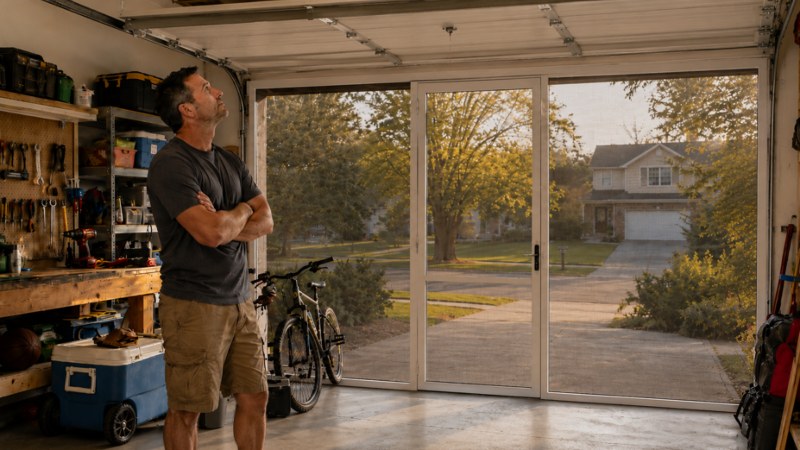
A summer garage setup with a lifestyle screen door makes smooth garage door operation more important.
If you spend a lot of time in your garage during the summer, you eventually start paying attention to things you used to ignore.
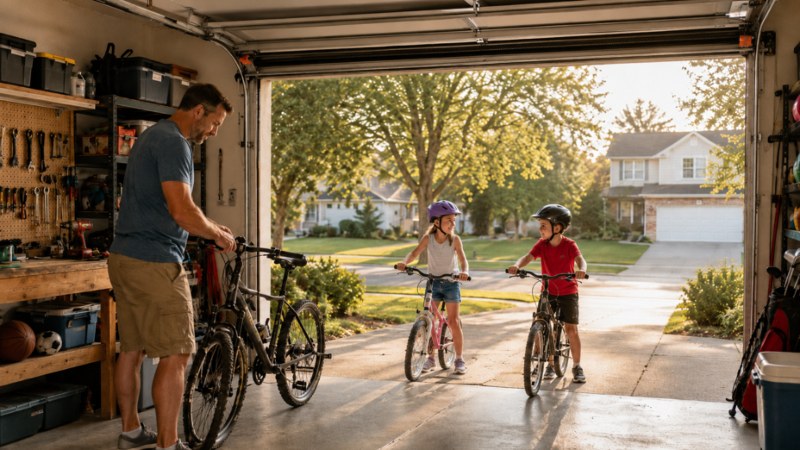
I live in Joliet, not far from New Lenox, and when the weather finally warms up, my garage turns into more than just a place to park. It becomes the summer command center. Bikes come in and out. Lawn tools get pulled down. The kids grab sports gear. I work on small projects. Sometimes I open the garage, bring down the lifestyle screen door, and let the breeze come through while keeping the bugs out.
It sounds simple, but all of that summer garage living depends on one part most homeowners never think about until it breaks.
The garage door springs.
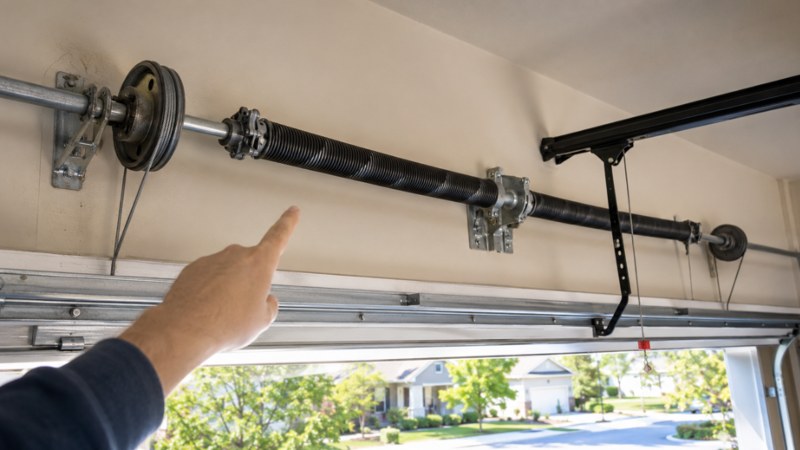
I used to think the opener was doing all the work. Press the button, door goes up. Press it again, door comes down. But after learning more about how garage doors actually work, I realized the opener is not supposed to lift the full weight of the door. The springs do most of the heavy lifting by counterbalancing the door’s weight.
That means when your springs are worn out, weak, rusty, or close to failing, the whole system works harder. And during a Chicago summer, that matters.
Why Garage Door Springs Matter So Much
A typical garage door is heavy. Depending on the size, material, insulation, and hardware, it can weigh hundreds of pounds. The springs are what make that weight manageable.
When everything is working properly, the door should move smoothly and evenly. The opener should not sound like it is struggling. The door should not slam down. It should not feel unusually heavy if you try to lift it manually.
Once I understood that, I started looking at my garage door differently.
Every time my family opens and closes the door, the springs are under tension. Every trip to the grocery store, every bike ride, every time the kids forget something in the garage, every time I raise the screen or close everything up for the night, that is another cycle.
In the summer, those cycles add up fast.
Chicago Summers Can Be Tough on Garage Doors
Living in the Chicago Metro Area means we deal with big seasonal changes. Cold winters, humid summers, storms, temperature swings, and plenty of moisture.
That kind of weather can be hard on mechanical parts. During the summer, garage door springs may deal with:
- Higher daily use
- Heat and humidity
- Moisture that can contribute to rust
- Metal expansion and contraction
- Storm-related stress on the overall door system
- More frequent opening and closing from summer activities
For someone like me who uses the garage as a summer hangout space, the door gets used more than it does in the middle of winter. The lifestyle screen makes the garage more comfortable, but it also makes me pay closer attention to how smoothly the whole opening works.
If the door is jerky, loud, uneven, or struggling, the screen setup becomes less enjoyable too. The whole system needs to operate smoothly.
The Moment I Realized My Springs Might Be the Problem
The first sign was noise.
At first, I brushed it off. Garage doors make noise, right?
Then I noticed the door looked like it was moving a little unevenly. Not dramatically, but enough that I could tell something felt different. The opener seemed louder too, almost like it was working harder than usual.
That is when I started reading about garage door springs and realized these were not things to ignore.
A weak spring can put extra strain on the opener. A broken spring can leave the door stuck. A badly worn spring can create a safety issue, especially if the door becomes too heavy or unpredictable.
That is not something I want to find out the hard way with kids running in and out of the garage all summer.
Signs Your Garage Door Springs May Be Wearing Out
I’m not a garage door technician, and I would never suggest trying to adjust or replace springs yourself. Garage door springs are under serious tension and can be dangerous.
But there are warning signs homeowners can watch for. Your springs may need professional attention if:
- The garage door feels unusually heavy
- The door opens a few inches and stops
- The door closes too quickly
- The door moves unevenly
- You hear loud popping, banging, or snapping sounds
- The opener sounds like it is struggling
- There are visible gaps in the spring
- The spring looks rusty or stretched
- The door shakes or jerks while moving
- The door will not stay open manually
If any of these are happening, it is a good time to schedule service before the issue turns into a bigger repair.
For homeowners who need garage door repair in Chicago, it is smart to have a trained professional inspect the spring system before the door becomes unsafe or unusable.
Why Summer Use Can Speed Up Spring Wear
Springs wear down over time because they are built around cycles. One cycle is one full open and close of the garage door.
During summer, my garage door gets used constantly. I’m opening it to work in the garage, closing it when we leave, opening it again when the kids come home, raising the screen, closing the main door before a storm, and doing it all again the next day.
That kind of daily use may not seem like much, but over the course of a season, it adds up.
If your springs were already older heading into summer, the extra activity can bring hidden wear to the surface. That is why a garage door can seem fine one week and suddenly stop working the next.
It usually was not sudden. It was building up over time.
The Opener Should Not Be Doing All the Work
One thing I learned is that a garage door opener is not designed to force a heavy, unbalanced door up and down every day.
If the springs are weak, the opener has to work harder. That can lead to opener strain, gear damage, motor issues, or inconsistent operation.
That matters even more if your garage is part of your daily lifestyle.
If you use your garage as a workshop, home gym, hangout area, or summer screen room, you want the system working smoothly. A worn spring does not just affect the door. It affects the whole experience of using the garage.
Do Not Try to Fix Garage Door Springs Yourself
This is the biggest thing I would tell another homeowner.
Do not mess with the springs.
There are plenty of home maintenance tasks I’m comfortable doing myself. I can organize the garage, replace light bulbs, clean the tracks, check the weather seal, and keep an eye on the door’s movement.
But springs are different.
Garage door springs are under high tension. Trying to adjust, loosen, tighten, or replace them without the right tools and training can be dangerous. This is one of those times when calling a professional is the smarter move.
If something feels off, get the door inspected.
Why an Annual Garage Door Inspection Makes Sense
Before I started paying attention to my garage door, I thought maintenance was something you did only after something broke.
Now I think about it differently.
An inspection can catch things early, such as:
- Worn springs
- Fraying cables
- Loose hardware
- Noisy rollers
- Track alignment issues
- Opener strain
- Sensor problems
- Rust or corrosion
- Balance problems
That kind of maintenance is especially helpful before or during summer, when the garage door is getting more daily use.
For homeowners looking for garage door repair in Chicagoland, a professional inspection can help catch spring, cable, opener, and balance issues before they turn into an emergency.
Quick Garage Door Spring FAQ
How do I know if my garage door spring is broken?
A broken spring may leave the garage door stuck, extremely heavy, uneven, or unable to open more than a few inches. You may also notice a visible gap in the spring.
Can I open my garage door with a broken spring?
You should avoid forcing the door open. A door with a broken spring can be extremely heavy and unsafe. It is better to call a professional.
Why does my garage door opener sound like it is struggling?
The opener may be straining because the springs are weak or the door is not properly balanced. The opener should not have to carry the full weight of the door.
Does summer weather affect garage door springs?
Summer heat, humidity, moisture, and increased garage door use can all contribute to wear on springs and other moving parts.
Should garage door springs be inspected every year?
Yes, an annual inspection is a smart way to catch spring wear, cable issues, opener strain, and other problems before they become emergencies.
My New Summer Garage Rule
If I am going to use the garage more, I need to maintain it more.
That is my rule now.
The garage is not just a storage area. It is where summer happens. It is where the kids grab their bikes, where I work on projects, where the screen door lets the breeze in, and where the day starts and ends.
But none of that works well if the garage door is unreliable.
The springs may not be the most exciting part of the garage, but they are one of the most important. When they are working, you barely think about them. When they fail, everything stops.
That is why I would rather have World of Doors check the system before summer gets busy than lose a weekend because the garage door will not open.