
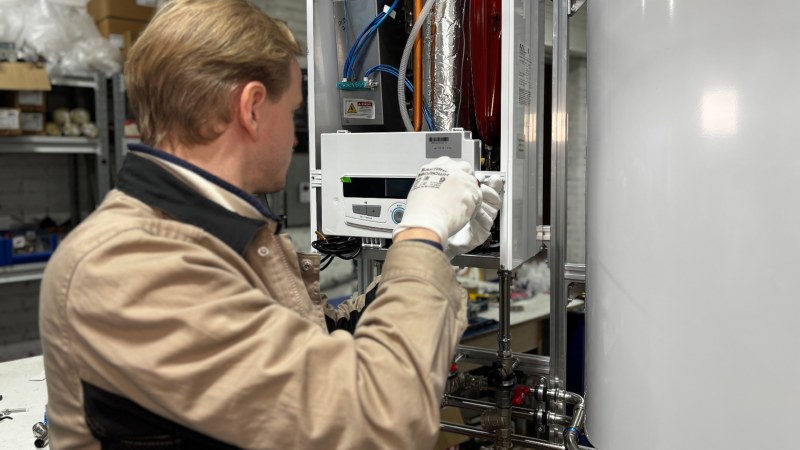
| Potterton boilers use numeric or alphanumeric error codes to indicate specific faults, from low pressure and ignition failure to overheating and electrical problems. Most codes point to a single system issue. Some, like a pressure fault, are safe for homeowners to address. Others, particularly electrical or gas-related codes, need a Gas Safe registered engineer. Knowing what the code means before you do anything is the right first step. |
Potterton has been manufacturing boilers in the UK for well over a century, and their units are found in millions of homes. Reliable as they generally are, every boiler will eventually show a fault code, and Potterton models are no exception.
Understanding potterton boiler error codes properly means you can make a sensible decision about whether to reset, repressurise, or pick up the phone rather than simply staring at a display and hoping it fixes itself.
This guide covers the most common Potterton fault codes, what each one actually means inside the boiler, and what your options are when one appears.
How Potterton Error Codes Work
Potterton boilers use a self-diagnostic system that monitors key components continuously. When a reading falls outside the expected range, the boiler logs a fault and displays a code on the front panel. Depending on the severity, the boiler may continue running with reduced function, or it may lock out completely and wait for a manual reset.
Codes are usually displayed as E followed by a number, though some older Potterton models use a different format. The number itself corresponds to a specific fault category rather than a random label.
Potterton fault codes give you, and any engineer you call, a starting point for diagnosis. They do not always identify the exact failed component, but they narrow it down significantly and save time on the inspection.
Common Potterton Boiler Error Codes
1. E1 or E119: Low Water Pressure
Low pressure is the most frequently seen fault on combination boilers, and Potterton is no different. Water pressure needs to sit between 1 and 1.5 bar for the boiler to operate correctly. When it drops below that threshold, typically around 0.5 bar, the boiler shuts off and logs a pressure fault.
Pressure drops for two reasons: either air has been released from the system through a radiator bleed, or there is a slow leak somewhere. Repressurising the system through the filling loop usually resolves this, and it is one of the few boiler faults that most homeowners can safely address themselves.
If the pressure keeps dropping within days of being topped up, there is a leak somewhere. That needs a professional to locate and fix.
2. E2 or E168: PCB or Electrical Fault
This code points to a problem with the boiler’s printed circuit board or its electrical supply. The PCB is the control unit that manages every function of the boiler, from ignition timing to pump speed. A fault here can cause a range of secondary symptoms: the boiler might fire intermittently, fail to respond to the thermostat, or not start at all.
PCB faults can be caused by a faulty component on the board itself, water ingress, a wiring connection that has worked loose, or occasionally a power supply issue upstream of the boiler. Diagnosis and repair require a qualified engineer.
3.E3 or E133: Ignition Failure
An ignition failure means the boiler attempted to light and could not confirm a stable flame. This is similar in cause to an F2 error on Ideal boilers. The most common culprits are a dirty or worn ignition electrode, a faulty flame sensor, an issue with the gas valve, or insufficient gas pressure reaching the burner.
Start by confirming your gas supply is working via another appliance. A single reset is reasonable if there is no gas smell. Beyond that, an engineer should be involved. Gas valve and electrode faults both require Gas Safe registration to work on legally.
4. E9 or E110: Overheat Lockout
When the boiler detects that water in the heat exchanger has exceeded the safe operating temperature, it shuts down immediately. This overheat protection prevents damage to the heat exchanger and surrounding components.
Common causes include a blocked heat exchanger with limescale, a pump that is not circulating water properly, a faulty NTC thermistor giving an incorrect temperature reading, or a closed valve somewhere in the system restricting flow.
Do not repeatedly reset an overheat fault. Running the boiler in an overheat condition without fixing the cause risks damaging a heat exchanger, which is one of the more expensive components to replace.
5. E128: Fan Fault
Potterton boilers use a fan to push combustion gases safely out through the flue before and during burner operation. An E128 code means the boiler has detected a problem with fan speed or operation.
Fan faults are usually caused by a failing fan motor, a damaged fan capacitor, or a wiring fault between the fan and the PCB. Some are also triggered by a blocked flue preventing the fan from building the correct pressure. Either way, this is an engineer’s job.
6. E160: Gas Valve Error
A gas valve fault means the boiler cannot confirm the valve is opening and closing correctly. This might be a mechanical failure of the valve itself, an electrical fault in the valve’s actuator, or a signal problem from the PCB.
Gas valve work is strictly for Gas Safe registered engineers. Do not attempt to inspect or adjust any gas valve components yourself.
7. E385: Electrical Supply Issue
The E385 code relates to the electrical supply reaching the boiler. Potterton heating fault codes in this category can indicate incorrect polarity at the connection, a neutral fault, or an issue with the incoming supply.
This is not a boiler component failure in the traditional sense. It is a wiring or supply fault that needs an electrician or a Gas Safe engineer with electrical competency to resolve. Running a boiler with a wiring polarity issue can cause ongoing PCB damage.
Potterton Error Codes at a Glance
| Error Code | What It Means | Likely Cause | DIY Safe? |
| E1 / E119 | Low water pressure | System leak or bleed needed | Yes (repressurise) |
| E2 / E168 | PCB or electrical fault | Wiring, PCB failure | No |
| E3 / E133 | Ignition failure | Electrode, gas supply, valve | Partial (check gas) |
| E9 / E110 | Overheat lockout | NTC sensor, pump, blockage | No |
| E128 | Fan fault | Fan failure or wiring fault | No |
| E160 | Gas valve error | Faulty valve or PCB signal | No |
| E385 | Electrical supply issue | Wiring or supply fault | No |
What to Do When a Fault Code Appears
Before calling anyone, run through these steps in order.
- Note the exact code displayed. Take a photo of the boiler display if possible.
- Check the pressure gauge. Anything below 1 bar points to a pressure fault regardless of the code shown.
- Check whether other gas appliances are working. If not, your gas supply is the issue, not the boiler.
- Check for any smell of gas near the boiler. If you can smell gas, do not reset. Open windows, leave the property, and call 0800 111 999.
- For codes not related to pressure or gas supply, attempt one reset using the boiler’s reset button and observe the result.
- Do not reset more than once or twice. Repeated resets without fixing the cause can make diagnosis harder and occasionally cause further damage.
A fault that clears on reset and does not return for several days might be a one-off. One that returns within hours, or immediately, needs professional attention.
Potterton Boiler Repair Solutions: What Homeowners Can and Cannot Do
There are only two fault types that homeowners should typically attempt to address themselves: low pressure and basic resets.
Repressurising a boiler through the filling loop is straightforward and safe if you follow the manual. Most Potterton boilers have the filling loop accessible under the front panel, with clear instructions. Bring the pressure up to around 1.2 bar and no higher.
Everything else, gas components, electrical faults, pump failures, sensor replacements, and flue blockages, requires a qualified engineer. Potterton boiler repair solutions for these faults are not a job for guesswork, and working on gas appliances without registration is illegal under UK law.
An annual service from a Gas Safe engineer is the best prevention. Engineers clean electrodes, test sensors, check flue operation, and spot early-stage faults before they cause a lockout.
How to Read Potterton Fault Codes on Older Models
Some older Potterton models, particularly those installed before 2005, display faults differently. Rather than an E-number code, they may use a flashing LED system or a simple lockout light with no accompanying number.
On these models, counting the number of flashes in a sequence corresponds to a fault category listed in the manual. If you no longer have the manual, Potterton’s support line or a boiler engineer can cross-reference the flash pattern to a fault type.
Older models are also more likely to have discontinued parts, which is worth bearing in mind when weighing up repair against replacement.
When a Fault Code Means It Is Time to Replace
Not every fault is worth repairing. Boilers over 12 to 15 years old showing repeated faults, particularly PCB or heat exchanger issues, may cost more to repair than they are worth in remaining lifespan.
A good engineer will give you an honest assessment of repair versus replacement based on the boiler’s age, condition, and the cost of parts. Be cautious of anyone who immediately pushes for a new boiler without properly diagnosing the fault first, and equally cautious of anyone who promises a quick fix on a boiler showing multiple recurring codes.
Final Thoughts
Potterton boilers are well-built, widely supported, and have a strong track record in UK homes. When a fault code appears, it is worth taking a moment to understand what it is saying before reaching for the reset button or the phone.
Most codes point to a specific area of the system. Some are straightforward to resolve. Others need a qualified engineer and should not be left running or repeatedly reset without proper diagnosis.
0800 Homefix offers professional Potterton boiler diagnostics and repair from Gas Safe registered engineers. Whether you are dealing with a pressure fault that keeps recurring or a more complex code you have never seen before, getting the right diagnosis first saves time, money, and the frustration of the same fault reappearing a week later.
Frequently Asked Questions
Q: What is the most common Potterton boiler fault code?
Low pressure codes, typically E1 or E119 depending on the model, are the most frequently seen fault on Potterton boilers. They are also among the easiest to resolve, usually requiring nothing more than repressurising the system through the filling loop.
Q: Can I reset a Potterton boiler myself?
Yes. Most Potterton boilers have a reset button on the front panel. Holding it for three to five seconds clears the lockout. One or two reset attempts are reasonable. If the fault returns immediately or within hours, the underlying cause needs professional diagnosis.
Q: What does an E9 fault mean on a Potterton boiler?
An E9 code indicates an overheat lockout. The boiler has detected that water in the system has reached an unsafe temperature and shut down. Common causes include limescale in the heat exchanger, a failing pump, or a faulty temperature sensor. This needs an engineer to diagnose properly.
Q: Why does my Potterton boiler keep losing pressure?
A boiler that loses pressure repeatedly usually has a slow leak somewhere in the system. This might be at a radiator valve, a joint in the pipework, the boiler itself, or the expansion vessel. Topping the pressure up repeatedly without finding the source is not a solution and can mask a worsening leak.
Q: Is an E385 fault on a Potterton boiler dangerous?
An E385 fault relates to the electrical supply to the boiler, often an incorrect wiring polarity or a neutral fault. Running a boiler with incorrect wiring can damage the PCB over time and poses a risk in the broader electrical sense. It should be investigated by a competent engineer rather than ignored.
Q: How do I know if my Potterton boiler fault needs a Gas Safe engineer?
Any fault involving gas components, the flue, the gas valve, or ignition requires a Gas Safe registered engineer. Electrical faults, PCB issues, and sensor replacements also require professional attention. Only pressure faults and basic resets are appropriate for homeowners to attempt themselves.
Q: My Potterton boiler shows a fault code but still works. Should I get it looked at?
Yes. A fault code that appears but does not immediately stop the boiler often indicates a component that is beginning to fail rather than one that has completely given up. Getting it checked while the boiler is still running is far less disruptive and often cheaper than waiting for a complete breakdown.
Q: How long do Potterton boilers typically last?
A well-maintained Potterton boiler will typically last between 10 and 15 years. Annual servicing significantly extends operational life and reduces the likelihood of fault codes appearing between services. Boilers beyond 12 years showing multiple faults are worth evaluating against replacement costs.