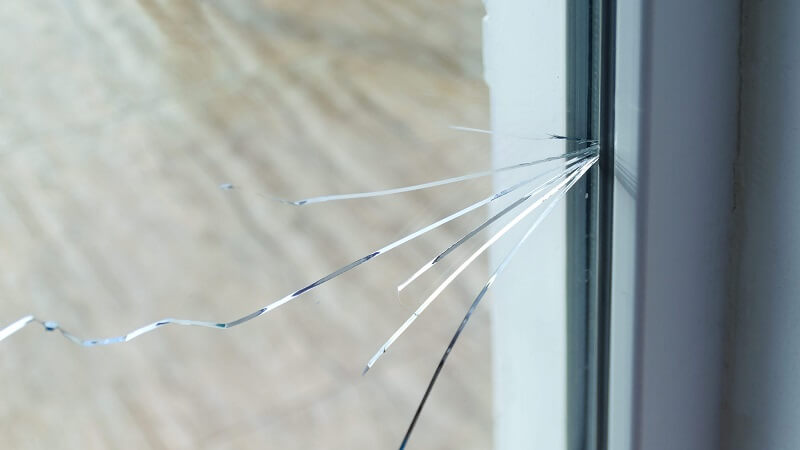
You walk into the kitchen one morning to find a long, clean crack running diagonally across the window. No baseball came through it. No tree branch hit it overnight. The window is intact, the seal looks fine, and yet there it is, a perfect line of damage that seems to have appeared from nowhere.
This is one of the most confusing scenarios a homeowner can run into, and it is also one of the most common. The crack is real. The cause, however, is not vandalism or accident. It is physics.
Glass moves. It expands and contracts with temperature, and when those forces concentrate at the wrong point on the pane, the glass yields. The result is what the industry calls a thermal stress crack, and learning to recognize one can save a property owner from chasing the wrong explanation. Reputable glass repair specialists Toronto see these cracks regularly, especially during seasonal swings when interior heating and exterior cold create the largest temperature differentials across a single sheet of glass.
Here is how thermal stress works, how to identify a crack caused by it, and how to prevent the next one.
The Physics in One Paragraph
A single pane of window glass is not heated or cooled uniformly. The center of the pane sits in direct sunlight or behind a curtain. The edges sit inside the sash or frame, shielded from light and air movement. When the center heats rapidly while the edges stay cool, the center expands while the edges resist. That stress has to go somewhere. If it exceeds the strength of the glass at any single point, the pane cracks.
The same logic applies in reverse during winter. A cold morning chills the edge of a pane while interior heat warms the center. The contraction differential at the edges concentrates stress along the perimeter, and a crack starts at the edge and runs inward, often at a perfect angle.
How to Recognize a Thermal Stress Crack
Thermal stress cracks have a recognizable signature. Knowing it helps you rule out other causes immediately.
- The crack typically starts at the edge of the pane and runs inward, often slightly curved or wavy. Impact cracks, by contrast, almost always radiate outward from a clear center point.
- There is no chip, no point of impact, and no debris. A baseball or a stone leaves a small entry point. Thermal cracks do not.
- The crack often appears on a single pane of an insulated unit, not both. If only the outer or inner lite is cracked while the other is intact, thermal stress is a likely culprit.
- It tends to happen on windows facing strong sun exposure, especially south and west-facing windows, and often after a sharp temperature change.
The Conditions That Make Thermal Cracking More Likely
Some windows are inherently more vulnerable to thermal stress, and some installations create the conditions that trigger it. The common contributors include:
- Tinted or coated glass that absorbs more solar energy than clear glass and heats up faster at the center.
- Partial shading. A curtain or blind that covers part of the pane creates a temperature differential between the shaded and exposed sections.
- Furniture or boxes pressed against the interior of the glass, which traps heat against a small area.
- Stickers, decals, or films applied unevenly, which can act as heat concentrators.
- Edge damage from installation. A small chip on the perimeter, often invisible from a normal viewing distance, creates a stress concentrator that a temperature swing can later turn into a full crack.
What Thermal Stress Tells You About the Window
A thermal stress crack is often a sign that the window unit is approaching the end of its functional life. Insulated glass units lose their inert gas fill at roughly one percent per year through microscopic pathways in the perimeter seal, and the seal materials themselves become more brittle over time. According to recent industry analysis on insulated glass performance, roughly twenty to thirty percent of insulated windows develop seal failure within ten years, particularly in climates with significant freeze-thaw cycling. A unit with a compromised seal is more vulnerable to temperature differentials because the gas that once helped buffer thermal change is no longer doing its job.
In other words, a thermal stress crack on an older window is not just bad luck. It is the pane telling you that the unit underneath has been working harder than it should for a while.
Repair Versus Replace
Once a thermal stress crack has appeared, the pane itself cannot be repaired. The crack will not close, and any patching solution is cosmetic at best. The question becomes whether to replace only the cracked glass unit or the entire window assembly.
If the frame is sound, the hardware works smoothly, and the rest of the window is in good condition, replacing only the insulated glass unit is almost always the right call. It restores the thermal performance of the window at a fraction of the cost of full window replacement. A qualified glass specialist can pull the damaged unit, match the specifications, and install a fresh sealed unit in the same frame.
If the frame is showing rot or distortion, if hardware has failed, or if the window is one of several aging units approaching the same threshold, a fuller assessment makes sense before choosing direction.
Preventing the Next One
Once you know what causes thermal stress cracks, prevention is largely about managing the conditions that produce them.
- Avoid pressing furniture or boxes against the interior of a sun-exposed window.
- Keep blinds and curtains either fully open or fully closed during peak sun hours rather than partially covering the glass.
- Trim back any landscape elements that cast moving shadow patterns onto the pane through the day.
- Inspect the perimeter of the glass periodically for small chips or dings, and have them addressed before they become stress concentrators.
- Have older units checked for seal integrity, especially if you notice fogging between the panes, which is a clear sign of seal failure.
The Bottom Line
Glass does not crack for no reason. When the cause is not impact, the cause is almost always stress, and the most common form of stress on a residential window is thermal. Recognizing a thermal crack for what it is short-circuits the wrong conversations and points the homeowner toward the right fix.
The next time a window cracks without warning, look at the line of the break. If it starts at the edge and runs inward, the window is not the victim of bad luck. It is responding to forces it has been managing for years, finally exceeding what it could absorb.